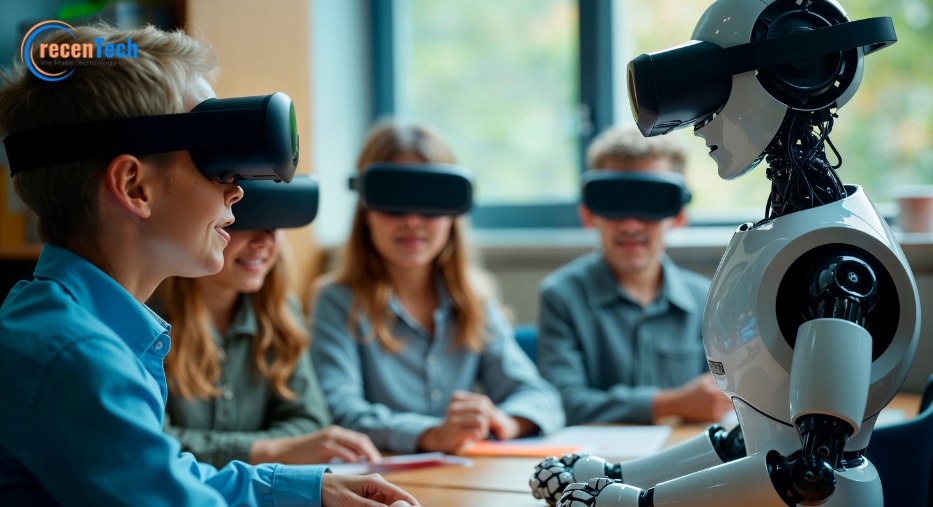
AI helps teachers to get back their time, be more efficient, and increase the level of personalization in learning. When it comes to the case of CrecenTech, AI serves as a virtual co-pilot, blending data-driven display screens with useful insights for planning, feedback, and guidance.
Artificial intelligence helps teachers enhance student learning and creates a positive classroom experience. AI acts as a co-pilot as it assists teachers with all the necessary simple tasks, thereby freeing the time to focus on learners’ academic performance.
Intelligent systems assess activity, suggest what should happen, and present facts before the knowledge gap occurs. Schools get more consistent feedback, early intervention opportunities, and increased engagement, and it is because educators get better assistance.
CrecenTech incorporates transparent and privacy-centric AI with learning analytics dashboards to inform and drive next steps from data. In this blog, you’ll learn how CrecenTech utilizes AI technology to drive teaching excellence and deliver significant academic outcomes.
How Artificial Intelligence Helps Teachers
Let's find out how AI plays a crucial role in supporting teachers with the assessment report preparation, attendance tracking, and student learning.
Streamlining the Daily Teaching Jobs
AI reduces administrative effort by automating attendance tracking, submissions, reminders, and basic reporting. CrecenTech dashboards provide real-time insights, so teachers spend less time managing data and more time teaching.
AI also enhances lesson planning as it suggests objectives that are in line with standards and recent performance. Teachers remain in command, refining plans to suit their needs in the classroom.
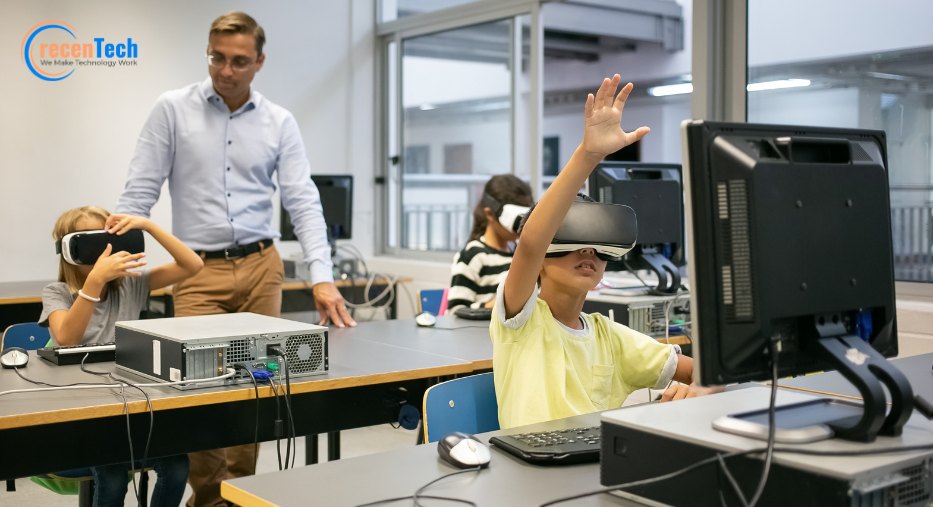
Personalized Learning
AI delivers personalized learning at a rapid pace as it understands the answers given by the students and adapts activities based on this data. The progress made is then monitored by the teacher, and the students are exposed to appropriate levels of difficulty at the right times.
These features create an inclusive and equitable approach with robust dashboards and scalable personalized learning platforms.
Grading and Administration Automation
The AI deals with the objective of grading, trending, and pointing out discrepancies, while the attendance and assignment grades are automatically updated. The teacher can then focus on the qualitative aspects of teaching because of the consistency brought about by the AI.
The aim, therefore, is augmentation and not substitution, and AI assists professional judgment without replacing it.
Smart Tutoring and Assistance for Students
AI offers adaptive learning opportunities if one-on-one help cannot be given. Teachers are enabled to monitor results and direct learning activities based on the assistance derived from the AI system. This reduces teacher burnout and improves academic performance of students.
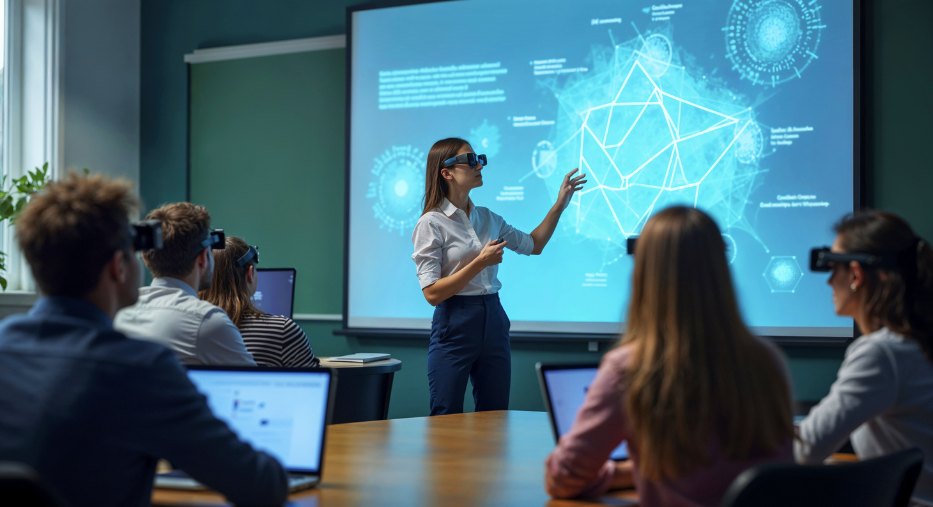
Classroom Engagement and Management Practices
The AI points out patterns of engagement and indicators of involvement, which inform the teacher on matters of grouping, pacing, and points of instruction emphasis.
Reminders and progress updates are automatic and leave more time for dialogue and feedback.
Impact of Artificial Intelligence Technology in Classrooms
Apart from the dashboards, CrecenTech assists in content curation using artificial intelligence, intelligent feedback, and analysis, all of which are integrated seamlessly with teaching.
Teachers can modify pacing and grouping based on their results to use their findings for good while operating in the class.
Reduce Teacher Workload and Burnout
With AI, this would provide the opportunity for automatic report creation, progress updates, and task administration to assist an individual in impactful activities like mentoring.
In other words, transparency and privacy should be maintained in the adoption of AI, if it is to be an integral and long-term teacher partner, not a burden.
Practical Application of AI
Now, we're going to discuss best practices concerning the implementation of AI technologies.
Building a Transparent AI Strategy
Here, the effective AI strategy in educational technology defines how technology supports teaching, rather than replacing it. Accordingly, CrecenTech recommended mapping tasks to outcomes: automation for routine work, insights for differentiation, and guidance for planning.
Pilot small, measure impact, scale gradually with teacher input and protections for privacy.
Choosing the Right Tools
Ease of use and classroom alignment, in addition to strong privacy protections, all enter when selecting the tool comes in. There should be intuitive dashboards, responsive support, and compatibility with the systems one already uses.
Utilize pilot tools; gather feedback from teachers, and measure time saved, accuracy, and satisfaction before wider adoption.
Training & Professional Development
Professional development includes continuous learning processes for the classroom. Micro-learning, or collaborating with others, can aid in the application of findings from AI in the classroom.
Having the same template, or prompts and rubrics linked to standards, helps gain confidence and increases adoption rates.
Measuring Impact on Learning Outcomes
Impact measurement is the process of translating classroom data into improvements. The dashboards offered by CrecenTech help translate the signs of classroom engagement or progress into something that can be acted on by teachers right away.
This is achieved through clear metrics that help the AI align with learning goals and preserve the teacher-student relationship.
Challenges and Risks
Problems common to this area include privacy issues, integration difficulties, and time limitations. Some methods used to solve these problems include facilitating privacy, incremental deployment, and compact training scheduled around the faculty members’ time.
There is trust developed, and adoption takes place easily with good governance and peer-coaching practices.
Effective AI Solutions for Teachers
To incorporate the aspect of innovation in the learning settings, you need to understand the following AI tools.
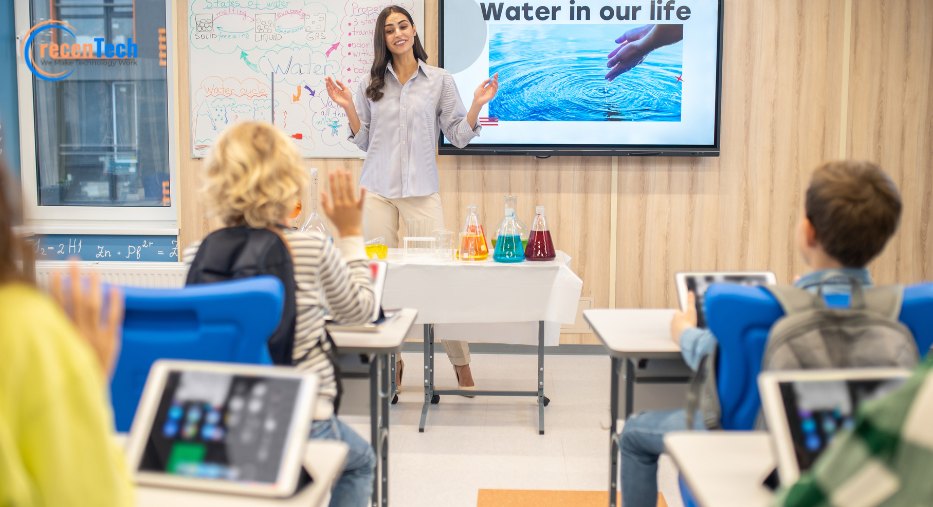
AI Agents
Artificial agents are serving as virtual co-pilots to assist in tasks like message preparation, quiz question preparation, information gathering, and summarization of student progress.
If used correctly, these technologies could play a role in supporting the functionality of the classroom environment without affecting its original purposes of schooling and the privacy of the students' information.
AI-Powered Applications
Such AI solutions need to start with the identification of learning objectives and the tenets of privacy by design principles. The company, CrecenTech, tries to personalize solutions based on the prevailing curriculum, teaching, and culture in the schools.
Explainable insights, component architectures, and user-friendly dashboarding enable scalability to a variety of domains and levels without requiring the reconstruction of models.
Case Studies
CrecenTech case studies indicate how AI has a positive effect on the classroom environment. For a few educational institutions focusing on linguistics skills, we utilized innovative AI solutions.
- There are important gains for elementary and middle-grade levels with AI-based literacy activities.
- High school and middle school pilot implementation incorporates artificial intelligence in feedback, assignments, and resource suggestions.
- Teachers are allotted more time for guidance interactions, class discussions, and projects.
Use of the software ensures better learning objectives, positive feedback, and customized instruction, as proclaimed by education experts.
Conclusion
AI helps teachers to get back their time, be more efficient, and increase the level of personalization in learning. When it comes to the case of CrecenTech, AI serves as a virtual co-pilot, blending data-driven display screens with useful insights for planning, feedback, and guidance.
It’s not a question of replacing teachers but rather an adjunct to them. While AI handles the menial tasks, teachers take the lead with innovation, passion, and expertise.
If you are ready to move ahead with learning how the use of AI can add value to your teaching life, you can set up a free 30-minute session with an AI strategy specialist.