Got an idea for a food delivery service or want to upgrade your current website design? Let’s get started with professional website development services. CrecenTech makes your platform work as hard as you do, from secure payments and easy ordering to real-time updates and loyalty features.
Over the past few years, there has been a drastic change in the way people order food. These days, customers have three core preferences: convenience, speed, and dependability. Customers want food delivered to their doorstep, whether they are having a late-night meal, a family dinner at home, or a quick lunch break at the office. This change has made having a good food ordering website an essential platform for eateries and delivery services.
Core Features Every Food Delivery Website Needs
A food delivery website is the main way that potential customers interact with your brand. It reflects your services, promotes trust, and has a direct impact on the number of customers who want to place their orders with you. However, what exactly is included in a full featured website? Let’s examine the core features that your food delivery website should include.
Secure User Registration & Login
Accessibility creates the first impression. Users might quit before viewing your menu if they face a difficult signup process. Simple, user-friendly registration options are available on food delivery websites. Consumers can register with their phone number or email address, or log in using social media accounts like Facebook or Google. A guest checkout option ensures that customers who wish to place a single order won't feel pressured to create an account.
Security is more important than convenience. Encrypted credentials and two-factor authentication protect user data and promote trust, which is essential for consumers disclosing payment information online. A smooth registration process lowers drop-off rates and boosts user retention, which helps your company get more orders right away.
Smart Search & Navigation
A good food delivery website makes it easy for users to find what they want. Customers can easily locate restaurants, cuisines, or dishes with smart search and filtering features integrated into websites. Finding options is nearly effortless thanks to features like category-based browsing and auto-suggestions while typing.
Consider an 8 PM user who has sushi cravings. They can filter restaurants by cuisine, price range, delivery time, and even dietary restrictions using an intelligent search system. In addition to saving time, this user-friendly navigation keeps users interested and increases the chances that their orders will be completed.
Real-time Order Tracking
Uncertainty regarding an order is the most annoying thing for a customer. This experience is completely changed by real-time tracking, which allows customers to see every step of their order journey. Customers are reassured and less anxious from preparation to pickup to delivery thanks to interactive maps and real-time status updates.
Additionally, users are kept informed at every stage by automated notifications sent via email, push notifications, or SMS. Customers feel more in control of their experience when you are transparent, boosting customer confidence in your service and promoting repeat business.
Multiple Payment Options
Convenience doesn't simply end here. Credit/debit cards, mobile wallets like Apple Pay and Google Pay, and even cash on delivery for regular customers are just a few of the payment options offered by a top-tier food delivery website. To accommodate shared meals among friends or coworkers, dsome websites additionally permit split payments for group orders.
Conversion rates are also increased by reducing checkout friction with a variety of safe payment options. When customers can pay in a way that feels safe and convenient, they are more likely to place their orders.
Engaging Restaurant Profiles and Menus
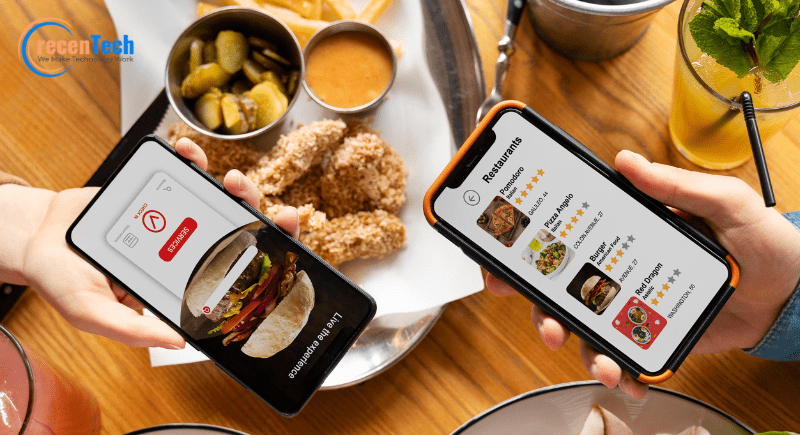
Immersive profiles highlighting each restaurant's offerings should be included. A realistic and reliable portrayal of each restaurant can be developed by using high-quality photos, thorough descriptions, preparation times, and nutritional data.
Customers should be able to customize their menus by choosing extras, varying the level of spice, or making special requests. In addition to lowering order errors, thorough profiles and menus improve the client experience by giving it a more intimate and engaging feel.
Customer Reviews & Ratings
A crucial factor in the online food ordering process is social proof. Restaurant credibility can be increased, and users can make well-informed decisions with reviews and ratings. Additionally, displaying user-generated content such as brief testimonials or pictures of meals can boost conversions. According to studies, websites with reviews have much higher levels of customer satisfaction and trust than those without reviews.
Loyalty Programs and Discounts
Rewards can attract customers. Including promotional offers and loyalty programs on a food delivery website promotes customer retention. Referral bonuses, points for recurring purchases, and discounts for first-time orders can convert casual diners into regular customers.
This boosts brand loyalty in addition to increasing order volume. When customers believe their loyalty is valued and acknowledged, they are more likely to return.
Mobile-Friendly Design
A responsive and mobile-optimized website is essential since most orders are placed on mobile devices. Even on tiny screens, mobile-friendly websites provide seamless navigation, fast loading times, and touch functionality.
Your customers will be able to place orders without frustration at any time and from any location if your mobile experience is flawless. Quick, easy-to-use design keeps users interested and encourages return visits.
Secure & Scalable Backend
Though people only focus on the frontend, reliability is recognized by the backend of the platform. Your website can manage traffic volumes during peak hours or promotional events without crashing if it has a secure infrastructure.
User data and operational efficiency are improved by server architecture, database system, and encrypted payment gateways. Investing in backend power results in fewer errors, faster load times, and enhance experience.
Integrated Marketing Tools
In addition to making ordering easier, a food delivery website should support business expansion. By integrating marketing tools like push notifications, email campaigns, and SEO-friendly pages, restaurants, and the platform itself can efficiently reach consumers. Analytics dashboards are useful for monitoring user behavior, improving menus, and marketing techniques.
These tools ensure that your website functions as a growth platform and a sales engine, converting visitors into clients and optimizing your company's potential.
Get a Custom Website for Your Food Delivery Startup
Got an idea for a food delivery service or want to upgrade your current website design? Let’s get started with professional website development services. CrecenTech makes your platform work as hard as you do, from secure payments and easy ordering to real-time updates and loyalty features.
Custom websites that look fantastic, function flawlessly, and support business growth are what we build and deliver. Whether you're upgrading an old platform or launching a new one:
- Make the ordering process easy and fun.
- Integrate simple and safe payment methods.
- Make sure your website functions flawlessly on all devices.
- Utilize resources to draw in and keep clients.
Are you prepared to bring your idea online? Let's create a website that delivers by getting in touch with us right now.