Here is the short version: a Headless CMS cuts content loose from layout so you get real flexibility, faster performance, and more control. Exactly what you need in a composable DXP world. It does require upfront spend, but that money goes into future-proof content, a sharper team, and consistently strong experiences across every channel your customers use.
Remember old websites? Simple times. One big system. It just handled everything: your content, the design, how it looked on screen all bundled up. That was a traditional CMS. Things are wild now. Much crazier. And way more interesting, if you ask me.
You hear "composable DXP" everywhere now, right? Sounds super high-tech. But honestly? All it really means is you pick the perfect tool for every single thing you need to do. Then you just make sure they all play nice together. Like custom-building your dream car, piece by piece, instead of just grabbing one off the dealer's lot. And in this new kind of setup, what CMS you pick – Headless CMS vs. traditional CMS – that's a massive decision. It seriously lays the groundwork for your entire digital strategy.
Content management giving you a headache? Need a flexible digital platform? Crecentech builds solid, composable DXP solutions. We use the Headless CMS power. See how we get your content out there, easy.
What Even Is a CMS, Anyway? Let's Keep it Simple.
Before we get deep into Headless versus Traditional, let's just make sure we're on the same page. A CMS? Content Management System. It's software. You use it to make, manage, and publish digital stuff. Think of it as your digital office. For all your content.
Traditional CMS: The "Everything Included" Deal
Imagine a classic site builder. WordPress, for example. Or Drupal. Joomla. These are traditional CMS platforms.
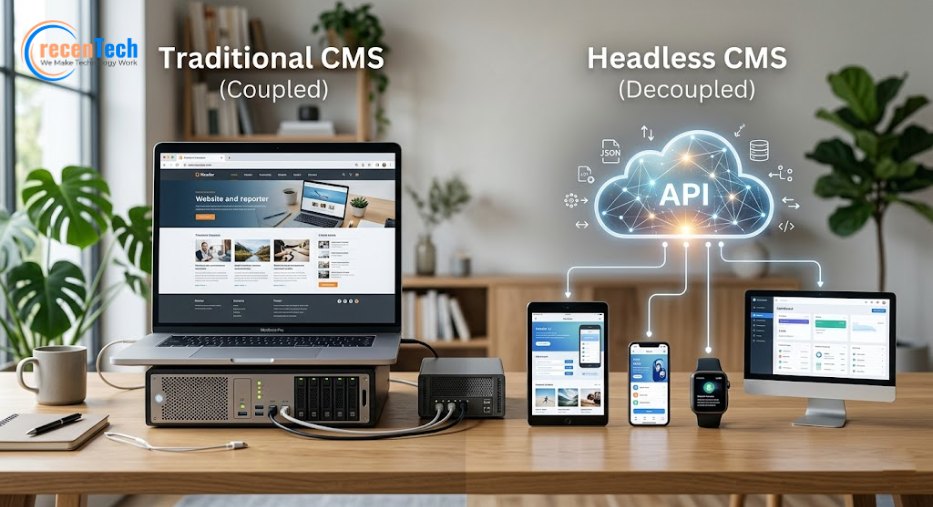
- How it works: It's one big thing. You type content in the back. The same system decides how it looks. It runs the database. It has website templates. It publishes straight to your site. Done.
- Think of it like: A house. Already built. Comes with walls. Roof. Kitchen. Layout. All decided. You move in. You can paint. Maybe knock down a wall if it’s not important. But the bones? They're set.
- Good parts: Easy to start. Good for basic websites. One system to learn. Content creators see what buyers see. Right away.
- Bad parts: Not very flexible. Content and how it looks? Stuck together. Hard to use that same content anywhere else. Like on phone apps. Or smart screens. Changing the front end (design) can be a headache.
Headless CMS: Content First, Look Later
Now, Headless CMS? That’s different. The "head" is gone. The head is the website. The app. How it looks.
- How it works: You make and manage your content. Just the pure stuff. Text. Pictures. Videos. All organized. This content lives in the Headless CMS. But the CMS doesn’t care how it shows up. No templates. No themes. Instead, it sends content using APIs. That’s an Application Programming Interface. Other systems grab content through this API. Then they show it however they want.
- Think of it like: A super clean library. Full of raw building materials. Bricks. Wood. Glass. All neatly sorted. No blueprint. No house built yet. You take those materials. Build a house. A skyscraper. A tiny cabin. Whatever. Use any tools you want.
- Good parts: Super flexible. Content is truly reusable. Send it to websites. Phone apps. Smart devices. Watches. Digital signs. Anything. You can change your "head" (your website design) anytime. Without touching the content. Developers love this.
- Bad parts: More complex to set up. You need developers. To build the "head." Not a one-stop shop. It can cost more upfront.
The Composable DXP World: Why This Matters Now
"DXP" means Digital Experience Platform. It’s a bunch of tools. All working together. To give customers a great digital journey. "Composable" means you pick the tools yourself. Like LEGOs. You don’t buy one giant, stiff DXP. You build it piece by piece.
In this composable world, flexibility is key. This is where Headless CMS vs. traditional CMS gets serious.
Everything Is Multi-Channel Now
Your customers aren't just on your website. No way. They’re on phone apps. Asking Alexa stuff. Seeing your brand on smart TVs. Maybe even in AR (augmented reality).
Here's the deal: a conventional CMS falters here. It's designed for a single head—the website. Trying to jam that content into ten other "heads" is a mess. It's like trying to fit a square block into a dozen round slots. It's awkward. It breaks. Developer hours get very expensive trying to force it.
A Headless CMS? It’s built for this. It sends content as pure data. So your app team can grab it. Your smart speaker team can grab it. Your website team can grab it. All from the same place. That’s "omnichannel." Consistent content. Everywhere.
Fast Changes, Fast Action: You Need to Be Quick
The digital world moves lightning fast. New social media. New device. You have to adapt. Fast.
- Traditional CMS: Changing your front end often means big updates. To the whole system. A "monolith." These updates are slow. Risky. Pricey. Like fixing up that pre-built house. Touch one thing, five others might break.
- Headless CMS: Your front-end framework can be changed. Try a different design. Without touching your material or your backend. It's similar to replacing your custom home's windows and paint. Without causing any damage to the foundation. Developers make use of their preferred tools. This results in quicker work. More experimenting. Faster reactions to changes in the market.
Deeper Look: Who Does What Best?
Let’s really dig into who benefits from each.
When a Traditional CMS Still Makes Sense:
Don’t completely ditch it. It still has its place.
- Simple Websites: Only need a basic website? A blog? No apps? No other digital stuff? Traditional CMS, like WordPress (with themes), is easy. Cheap to start. Content people can often handle it all themselves.
- Small Teams, Few Developers: Don’t have a lot of developers? Tight budget? The all-in-one nature means less tech setup. Less dev time upfront.
- "What you see is what you get" (WYSIWYG) is Key: Content editors often love seeing their content exactly how it will look. Traditional CMS nails this.
When Headless CMS Is the Champion:
This is where composable DXP really shines.
- Multi-Channel Plan: If you're on more than just a website. Apps. Smart devices. Digital signs. Name it. Headless is perfect. It keeps messages the same everywhere.Ready for the
- Future: Tech changes fast. A Headless CMS lets you change frontends easily. So you don’t get stuck with old tech. You can always use the newest stuff.
- Developer Freedom: Your developers aren't stuck in one language. Or one framework. They use what works best. What’s fastest? Makes them happy. And they get more done.
- Need for Speed: Headless setups usually mean faster websites and apps. Why? Content comes clean. No extra baggage.
- Personalization & More Integrations: Want to connect content to customer data (CRM)? E-commerce? Analytics? Personalization tools? Headless makes these connections much cleaner. You’re building a true composable DXP.
The Guts: Tech and How It Works
Let's get a little technical. Just enough to get it.
How It's Built and Deployed
- Traditional: One big piece. Frontend and backend are glued together. Usually hosted together. Updates? They affect everything.
- Headless: Separate. Content backend (the CMS) is apart from the frontend (the site, app). They talk using an API. This means you can host them separately. Scale them independently.
How Content Gets Created
- Traditional: WYSIWYG editor. You type, you see. A familiar sensation. Good for simple text and pictures, but it might restrict how your content is organized.
- Headless: Prioritizes content. Editors concentrate on the material itself. Not the way it appears. Structured content is the result. This means defining the many kinds of material. May initially feel strange. However, it is far more effective to repeatedly utilize content.
Security Talk
- Traditional: One big spot for attacks. If the whole CMS gets hit, both the content and how it looks are at risk.
- Headless: Separate parts mean better security. The content storage (CMS) is less exposed. The frontend can be safer. It's just taking data.
Money Talk
This part is rarely simple.
Traditional: Often cheaper to start, easier to staff, and hosting is usually bundled in. But as you scale or start integrating with more complex systems, costs can spike fast.
Headless: You will typically pay more upfront for developers, custom front-end work, and extra integrations. In return, you get flexibility that helps you avoid costly rebuilds later—and for large, complex projects, that can mean real savings over time.
Time to Choose: Headless CMS vs. Traditional CMS
So, who wins, then? No easy solution. Your team will determine this. Your objectives. Your spending limit. What is your desired size?
- Start with your plan: Where do customers see your stuff? Just a website? Or everywhere?
- Look at your team: Got developers?
Do they like modern tools? Or are your people mostly content creators? Who need easy visual editors?
Think about the future: Going to add more digital places? New tech? If yes, consider headless.
If your digital ambitions are getting bigger than just a simple website, and you really need your content to be seen consistently, no matter where your customers are? Well, then, Headless CMS is your best bet. Hands down. That is the core engine for what we call a composable DXP. It truly gives you the power. To craft those super flexible, future-ready digital experiences. The exact ones customers expect these days.
Confused by composable DXP and Headless CMS? Not sure where to begin? Crecentech can help. We guide you. Choose the right tools. Build a strong digital platform. Tailored for your business. Get in touch with us for a talk.
Conclusion
The digital world? It's not slowing down. Customers expect more. In more places. Faster. The old ways, that big, clunky traditional CMS? It’s holding people back.
Here is the short version: a Headless CMS cuts content loose from layout so you get real flexibility, faster performance, and more control. Exactly what you need in a composable DXP world. It does require upfront spend, but that money goes into future-proof content, a sharper team, and consistently strong experiences across every channel your customers use.