In 2025, AI marketing automation will not only improve campaigns but also revolutionize the way marketers operate. Businesses can interact more intelligently and more quickly with solutions that generate content, optimize in real-time, and customize at scale.
For businesses and marketers, the move towards AI-based automation marketing is now unavoidable. What was once primitive, rule-based automation has evolved into a vibrant ecosystem based on machine learning, predictive analytics, and natural language processing.
AI marketing strategies offer more innovative, faster, and more scalable alternatives to traditional marketing strategies.
This guide breaks down what AI marketing automation is, how it is being used in real-world campaigns (with results), the best AI marketing tools for 2025, Ethical, technical, and data privacy considerations, and the trends shaping the future of marketing automation.
What Is AI Marketing Automation?
In contrast to traditional automation based on static workflows, AI-based marketing streamlining optimizes and automates marketing processes, commonly referred to as AI marketing automation.
AI introduces smart systems that learn from data, predict future behavior, and make decisions without manual input. No more fixed rules like “send email after user signs up.
A Brief Overview of How It Evolved
Early 2010s (Static Workflows)
Marketing automation was limited to automated emails and CRM triggers. Potential leads are captured by filling out a contact form, which triggers a workflow in a system that sends them a follow-up email. It worked well, but it was static.
Mid-2010s to Early 2020s (Behavioral Triggers)
With the advancement of technology, marketers started applying behavior-based automation. With this, websites were able to send customized messages based on users' behavior, such as sending an email reminder if a customer abandoned their cart.
2025 and Beyond (Intelligence-Driven Experiences)
Now, with AI, marketing platforms can respond beyond their training. They monitor trends, predict customer behavior, and generate targeted content themselves. Even AI can decide whether to send an alert or recommend a product a user would want to follow.
Core Technologies That Power AI Marketing Automation
AI-powered marketing automation would not exist without some core technologies that enable modern marketing systems to function efficiently, think, learn, and create. Let us explore the four most important technologies that drive this transformation:
Machine Learning (ML)
Machine learning is one of the areas of artificial intelligence in which a computer learns to perform a task from data, without being explicitly instructed to do so. In marketing, ML systems continue to improve as they acquire more knowledge about users and are provided with feedback.
In marketing, it helps:
- Predict which leads are most likely to convert
- Automatically segment customers into groups
- Identify which campaigns perform best over time
Natural Language Processing (NLP)
Natural Language Processing (NLP) enables machines to read, understand, and generate human language. This is the technology behind voice assistants, intelligent chatbots, and AI writers.
- Real-time conversational virtual assistants & chatbots respond to FAQs, offer product recommendations, and qualify leads in real-time.
- NLP tracks social media, or product reviews, and detects whether the tone is positive, negative, or neutral.
- Content creation programs like ChatGPT, Jasper, or Copy.ai make high-quality emails, blog introduction paragraphs, product descriptions, and so on.
Predictive Analytics
Predictive analytics apply past facts, statistical modeling, and machine learning to predict future events or user behavior. It is one of the top technologies that enable marketers to be proactive, rather than reactive.
Real-World Applications in Marketing:
- Predicting and identifying the earliest signs of a customer's intention to leave.
- Optimal send time prediction algorithms to decide when to send an email.
- Personalized recommendations for content or products based on history.
Generative AI
Generative AI is a type of artificial intelligence that can create the latest content from scratch. While automation based on rules or templates is traditional, Gen-AI can quickly scale and frequently generate original marketing material.
- AI-assisted writing tools that generate subject lines or body text based on the situation.
- Marketers generate fresh captions, hashtags, and image prompts using AI models trained.
- AI can write SEO-friendly product descriptions that align with your brand voice
How These Technologies Work Together
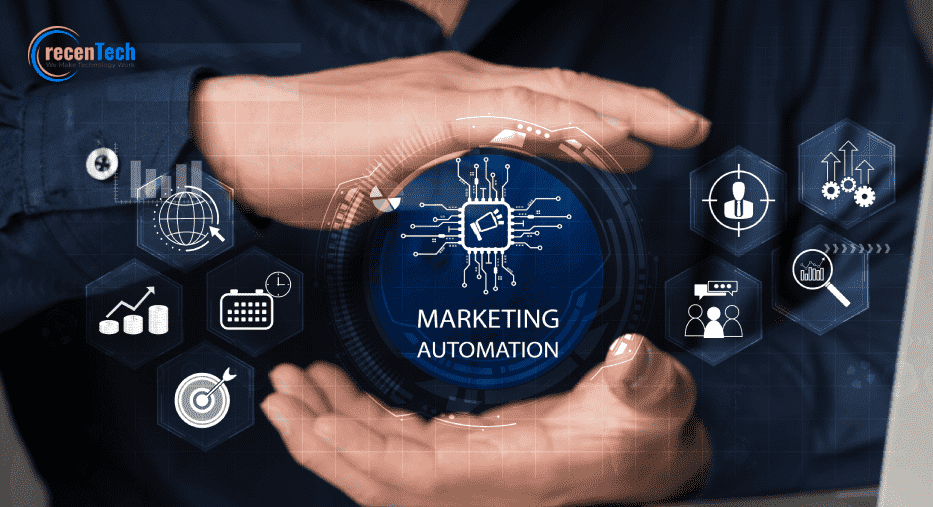
What is revolutionary about AI marketing automation in 2025 is how it incorporates and integrates to form a single, intelligent marketing engine.
The brainpower of the operation is intelligence, and that is machine learning, which processes user data and applies it to generate patterns and make informed decisions in the future.
Natural language processing (NLP) with human-level understanding in the equation enables AI to read customer interactions, detect sentiment, and even initiate conversational exchanges through virtual assistants or chatbots.
Predictive analytics, instead of responding to user action, now enables the system to anticipate it. It knows where a user is likely to convert, churn, or behave, and bases the timing, targeting, and content serving of the campaign on that.
Finally, there is creative content generated by generative AI, which utilizes predictive models and user history to produce email copy, ad copy, product suggestions, and even customized landing pages tailored to each user segment.
It all adds to a completely autonomous marketing system, one that does not just automate behavior but also learns, creates, makes, and predicts the optimal following action at every stage of customer experience.
Why AI Marketing Automation Matters in 2025
Consumers expect instant responses, hyper-personalized content, and seamless experiences across channels, all while brands juggle tighter budgets, privacy regulations, and rising customer acquisition costs.
That is where AI marketing automation steps in as a strategic game-changer.
The Market is Growing
From startups to Fortune 500 companies, automation powered by machine learning and predictive analytics is being adopted at an unprecedented rate.
Key Benefits Driving Adoption
1. Personalization at Scale
Marketers can deliver one-on-one experiences to thousands (or millions) of individuals using AI. With AI-driven customer segmentation, campaigns can be dynamically optimized based on predicted user intent, preferences, and behavior, thereby stimulating engagement and conversion.
2. Efficiency and Speed
Regular activities, such as A/B testing, campaign calendars, and lead scoring, are automated using intelligent logic. That involves less human effort, quicker campaign deployment, and a focus on strategy.
3. Improved ROI
With more effective targeting and content generation, advertisers end wastage on advertisements and optimize performance. From an AI-tuned campaign fine-tuning to a real-time decision, the outcome is typically a better return on investment and greater accountability with measurable marketing automation metrics.
4. Omnichannel Consistency
AI makes messages cohesive and context-rich in email, web, social, SMS, and even voice. This omnichannel marketing automation is pivotal to reaching customers where they are with the right message at the right moment.
Core Applications and Use Cases of AI Marketing Automation
AI marketing automation is actively transforming how brands engage with audiences at every stage of the customer journey. Below are some of the most impactful use cases where AI is already proving its value in 2025.
1. Email Marketing Automation
An AI system might detect when a user is most likely to open emails and automatically send them at that optimal hour. AI takes traditional email automation to the next level by enabling hyper-personalized campaigns using NLP for language tuning, ML for engagement prediction, and generative AI for content generation.
So, instead of sending the same email to an entire list, AI segments users based on behavior, demographics, and intent, and then dynamically generates personalized subject lines, content, and even send times.
2. Ad Campaign Optimization
In 2025, AI will manage everything from budget allocation to real-time bidding in PPC campaigns. Algorithms adjust ad spending, select keywords, and A/B test creative elements automatically, often more efficiently and accurately than human marketers. Google Ads or Meta campaigns are powered by AI tools that adjust spending and creatives based on hourly performance trends.
3. Chatbots & Conversational AI
AI-powered chatbots go beyond answering FAQs. Today’s systems can qualify leads, book appointments, handle transactions, and guide users through complex decision-making funnels all in real-time and often with a human-like tone. Such as a retail chatbot that recommends products based on browsing history and previous purchases, as well as upsell rates.
4. Lead Scoring & Nurturing
AI automates lead scoring by analyzing behavioral patterns and engagement metrics to determine which prospects are most likely to convert. It utilizes machine learning for scoring models to nurture those leads with personalized drip campaigns that adjust based on the lead’s interactions.
5. Customer Journey Automation
Behavioral tracking, journey orchestration tools, and ML-based automation rules map out entire customer journeys, from the first interaction to post-sale follow-ups. It ensures that customers receive the right content at the right time, across the proper channels, without manual intervention.
6. Content Creation & Personalization
With generative AI, NLP, semantic analysis, and dynamic content insertion.
Marketers produce blog posts, product descriptions, social media updates, and even video scripts on a scale. The content is now tailored to user personas, search intent, and past engagement.
Top AI Marketing Tools for 2025
The best AI marketing automation platforms of 2025 include:
| Tool | Best For | Notable Features |
|---|---|---|
| HubSpot | B2B marketing teams | Smart lead scoring, AI chatbots, workflows |
| ActiveCampaign | Email-first automation | Predictive sending, behavioral segmentation |
| Jasper AI | Content creation | Blog/article generation, tone adjustment |
| ContentShake AI | SEO-driven content | Optimization suggestions, competitor insights |
| Mailchimp | Small to medium e-commerce | Product recommendations, generative subject lines |
| Vendasta | Local businesses and agencies | Automated campaigns, reputation managementAutomated campaigns, reputation management |
Implementation: How to Get Started with AI Marketing Automation
There is a common misconception, perhaps fueled by optimistic SaaS demos, that integrating AI marketing automation is simply a matter of flipping a few switches. In practice, it rarely plays out neatly. What appears more likely is that organizations succeed only when they embed AI thoughtfully into both their technical infrastructure and their marketing philosophy.
Step 1: Audit Your Data Foundation
Before choosing tools, teams must evaluate the quality, quantity, and structure of their existing data. Are your customer records clean? Are touchpoints consistently tracked? AI thrives on context-rich data; disorganized or incomplete datasets not only underperform but can also actively distort outcomes.
And while many platforms claim to "work with any data," the truth is more nuanced. Machine learning models need stable feedback loops to refine accuracy. Without structured inputs (such as demographics, engagement logs, and conversion paths), you are teaching the system to make guesses in the dark.
Step 2: Choose Use Cases, Not Tools Firs
Ironically, the best AI implementation rarely begins with the use of AI. Instead, marketing teams are encouraged to identify pain points or bottlenecks first, such as high-churn segments, inefficient lead handoffs, and stagnant email metrics, and then work backward to see if AI can address those challenges.
This pragmatic, problem-first approach helps narrow the overwhelming vendor landscape and avoids the “shiny object” syndrome that plagues many Martech stacks.
Step 3: Select the Right Platforms
Tool selection should follow, not preceding, clarity of purpose. Prioritize platforms that integrate cleanly with your CRM and CMS, allow for modular expansion, and provide transparency around their AI models. Not all “AI” is created equal: some tools layer basic rules on top of existing systems and market them as intelligent.
Look for features such as:
- Customizable workflows
- Real-time data processing
- Human-in-the-loop options for creative oversight
- Native A/B testing and learning system
Step 4: Assemble a Cross-Functional Team
Successful AI marketing automation is not owned by marketing alone. You will need input from sales, IT, data science, and (increasingly) legal. This collaboration ensures that automation strategies are both compliant and grounded in business goals, rather than aspirational tech experimentation.
It is also wise to involve content creators early, as generative AI may write, but humans still edit, frame, and filter.
Step 5: Train, Monitor, and Iterate
The deployment phase is never truly “done.” AI automation is dynamic. As models learn, market behavior shifts, and creativity evolves, so too should your strategy.
Teams must commit to ongoing training, regular audits, and clear feedback loops. It is not about trusting the machine blindly; it is about fostering an adaptive ecosystem where humans and machines refine each other’s output.
What’s Next? 2025 Trends in AI Marketing Automation
As AI matures, here is a glimpse of what is shaping the next wave of AI-powered campaigns:
AI-First Campaigns
Marketing strategies will shift from AI-assisted to AI-native. Instead of plugging AI into existing workflows, brands will design campaigns from the ground up with AI in the lead, driving creative direction, predictive targeting, and multichannel deployment.
Real-Time Experience Engines
With advanced data integrations, AI will power live, context-aware interactions. Expect user behavior, geolocation, device signals, and even weather to influence content and offers in real time, all without human delay.
Emotion & Intent Detection
Next-gen NLP will understand mood, urgency, and emotional tone. Whether a user is frustrated, excited, or hesitant, AI will adjust its message to match, leading to richer personalization and more empathetic communication.
AI with Human Creativity
Rather than replacing creative teams, AI will enhance them. Marketers use AI to generate drafts, variations, and insights while humans refine the message, ensure brand voice, and inject storytelling that resonates.
Conclusion
In 2025, AI marketing automation will not only improve campaigns but also revolutionize the way marketers operate. Businesses can interact more intelligently and more quickly with solutions that generate content, optimize in real-time, and customize at scale.
The secret lies in striking a balance between automation and human insight: let AI manage execution, targeting, and data, while marketers focus on strategy, ethics, and creativity. Adopting the appropriate AI technologies now positions your business for long-term growth in an increasingly intelligent marketing landscape, regardless of whether you are just starting out or scaling up.