The search bar isn't going away, but the way it works has changed forever. Generative Engine Optimization is more than just technology. It is about authority. It is about being the most trusted voice in your field.
The online marketing landscape is currently undergoing its most significant transformation since the backlink. For years, we followed a simple rule. You find keywords, you build links, and Google puts you on the first page. But that era is fading. Now people do not just search. They ask, using ChatGPT, Claude, and Gemini to get answers. This is where Generative Engine Optimization, or GEO, comes in.
We have watched the internet evolve for two decades. This shift feels different. It is not just a small update to an algorithm. It is a total change in how we find information. If you want to stay visible, you need to understand how to talk to the machines that talk to your customers.
What exactly is Generative Engine Optimization?
GEO is the process of making your content easy for AI to find and use. Think about how an AI search engine works. It does not just show a list of websites. It reads the web, picks the best information, and writes a summary for the user.
If your website is the source for that summary, you will win. If the AI cites you as an expert, you will win. GEO is about being the "answer" rather than just a "result." It is a move away from pure ranking and toward being an authority that AI models can trust.
How GEO and SEO are different
SEO is about to be found. GEO is about being cited.
In traditional SEO, you care about things like site speed and how many people click on your link. These things still matter, but they are not the whole story. An AI model does not care about your click-through rate. It cares about whether your information is accurate and easy to summarize.
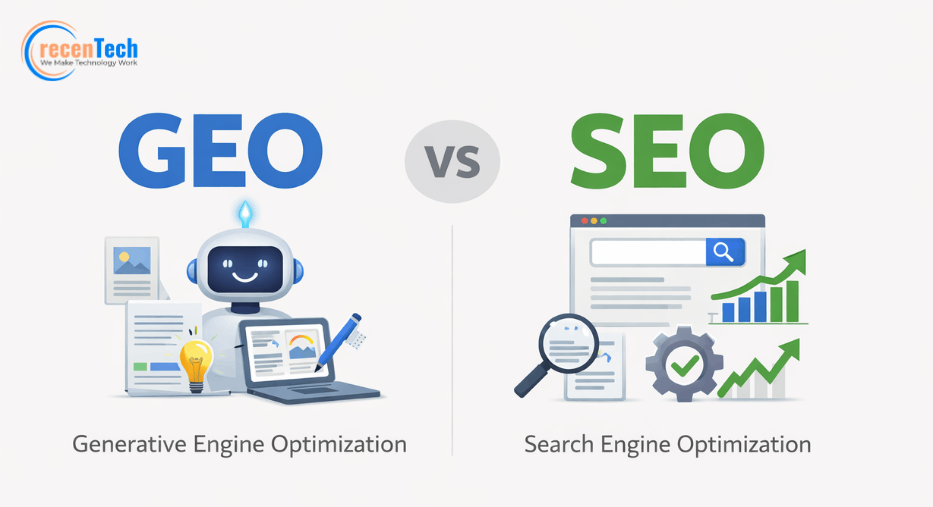
A quick comparison
| Feature | Traditional SEO | Generative Engine Optimization (GEO) |
|---|---|---|
| Main Goal | Get to the top of Google. | Be the answer in an AI summary. |
| Target | Search engine bots. | Large Language Models (LLMs). |
| Content Focus | Keywords and readability. | Facts, data, and citations. |
| Success Metric | Clicks and traffic. | Brand mentions and AI citations. |
| User Intent | Finding a specific page. | Getting a complete answer. |
Why the industry is moving toward GEO
The biggest problem for marketers today is the "zero-click" search. You have probably done this yourself. You ask Google a question, and the answer appears right at the top of the page. You get what you need, and you leave. You never click on a single link.
AI search engines like Perplexity or Google’s SGE take this even further. They give you a full paragraph of information. If your content is not part of that paragraph, you are invisible. GEO is our way of fighting back. It ensures your brand stays in the conversation even when people stop clicking.
How to optimize for AI engines
Optimizing AI requires a different mindset. You have to write for two audiences at once. You still need to help humans, but you also need to feed the AI on the right kind of data. Here is how you do it.
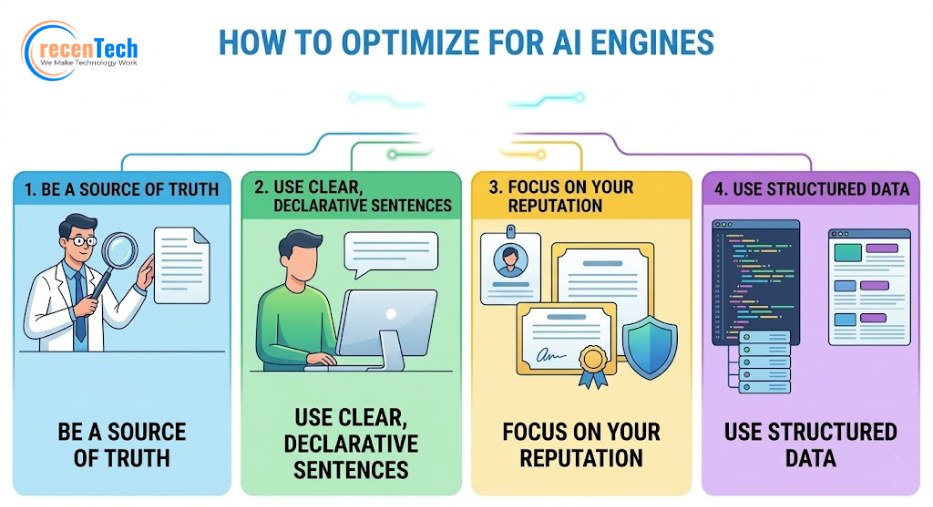
1. Be a source of truth
AI models are terrified of being wrong. They call it "hallucinating." To avoid this, they look for facts. If your content is full of fluff and vague opinions, an AI will likely ignore it. On the other hand, if you are providing solid data, original research, and clear statistics, the AI will rank on your site as a source.
2. Use clear, declarative sentences
AI models prefer content that is easy to parse. Long, rambling sentences might sound poetic, but they are hard for a machine to summarize. Use short sentences. State your point early. If you are writing about the "best coffee in New York," start the section by saying, "The best coffee in New York is [Brand] because of [Reason]." It makes AI's job much easier.
3. Focus on your reputation
This is what the industry calls E-E-A-T. It stands for Experience, Expertise, Authoritativeness, and Trustworthiness. An AI model looks at the whole website to see if you are a real expert. The AI will trust you more if other legitimate websites have mentioned you. It is about building a digital footprint that screams, “I know what I am talking about.”
4. Use structured data
Structured data, or Schema, is like a cheat sheet for AI. It tells the machine exactly what is on the page. It defines who the author is, what the product costs, and what the main topic is. It is technical, but it is necessary. It removes the guesswork for the AI.
The struggle of measuring success
This is the part that keeps marketers up at night. How do you measure a mention in a ChatGPT conversation? Traditional tools like Google Analytics haven't shown you this data yet.
Success in GEO looks different. You have to look at "Share of Model." This means checking how often an AI mentions your brand when asked about your industry. You also want to look at referral traffic from AI engines like Perplexity. It is a bit like Wild West right now. We are all still learning how to track these numbers accurately.
Do you still need a traditional SEO?
Yes. Do not delete your SEO strategy just yet. Most AI engines still use traditional search technology to find the content they summarize. If you don't have a good SEO, the AI might never find you in the first place.
Think of it as a partnership. SEO gets the AI to your door. GEO makes sure the AI likes what it sees inside and shares it with the world. You need both to survive in 2026.
Why human-centric content still wins
There is a temptation to start writing like a robot to please the robots. Don't do that. AI models are trained in human language. They are getting better at spotting content that was written just to "game the system."
The best way to win at GEO is to be the most helpful human in the room. Answer the questions that people are actually asking. Provide the details that only a person with real experience would know. That is the kind of content that gets cited.
Keeping up with AI can feel like a full-time job. It's because it is. If you're feeling overwhelmed by the shift from blue links to AI answers, we can help. At Crecentech, we stay on top of these changes, so you don't have to. We specialize in building strategies that work for both search engines and the new world of AI. Contact us to see how we can make sure your brand stays visible in the age of GEO.
Final Thoughts
The search bar isn't going away, but the way it works has changed forever. Generative Engine Optimization is more than just technology. It is about authority. It is about being the most trusted voice in your field.
Start by cleaning up your content. Remove the fluff. Add the facts. Make it easy for a machine to understand why you are an expert. If you do that, you won't just rank. You will be the answer people are looking for.