The only way forward is to stop reacting and start planning. That means running audits before problems explode, pulling in real threat intel instead of guessing, and using automation where humans can’t keep up.
Cybersecurity in 2025 is not just about defending against hackers but proactively keeping your business alive. Cybercriminals now operate like global enterprises, using AI-driven cyberattacks, deepfake scams, ransomware, and supply chain exploits to breach defenses faster than ever before.
Traditional defenses like antivirus software or basic firewalls are no longer enough. To survive, companies must adopt layered cybersecurity strategies, strengthen employee awareness, and prepare for threats that evolve daily.
This guide breaks down the top 15 cybersecurity threats businesses are facing in 2025 and shows why adopting proactive, layered defenses is critical to protecting your company in the digital economy.
Top 15 Cybersecurity Threats in 2025
- AI-powered cyberattacks
- Deepfake scams
- Ransomware (double/triple extortion)
- Sophisticated phishing
- Supply chain hacks
- Advanced malware (fileless, cryptojacking)
- DDoS attacks
- Quantum computing threats
- IoT device exploitation
- Cyber-enabled fraud (BEC, vishing, identity theft)
- Insider threats
- Configuration mistakes
- Cloud vulnerabilities
- Mobile risks
- Poor cyber hygiene
Businesses must combine employee training, layered defenses, and a strong security culture to stay safe.
What Are Cybersecurity Threats?
Cybersecurity threats are any risks that exploit weaknesses in your digital systems. They can be intentional attacks (like ransomware) or accidental mistakes (like a misconfigured cloud bucket).
Why do they matter? Because businesses today depend almost entirely on digital infrastructure. A single breach can:
- Halt operations for days.
- Lead to regulatory penalties.
- Damage customer trust.
Think of threats like storms at sea. Some are small waves you can ride out. Others are hurricanes that sink unprepared ships. Knowing which ones are on the horizon helps you set better sails.
The Evolving Threat Landscape in 2025
Let’s pause and take stock. Why are threats so much more serious now than even five years ago?
- AI adoption has given attackers tools that automate scams.
- Remote work widened the perimeter; home routers and personal devices are now targets.
- Cloud and SaaS tools multiplied dependencies, so one weak vendor affects many.
- Geopolitical conflicts trickle down into cybercrime markets, making nation-grade tools accessible to ordinary hackers.
In short, the threat landscape isn’t just growing, it’s mutating. What was once considered “state-level” is now available on underground forums for a few hundred dollars.

The Top 15 Cybersecurity Threats Businesses Can’t Ignore in 2025
1. AI-Powered Cyberattacks
It is easy to imagine artificial intelligence as a defensive-only tool, something that companies use to catch abnormalities or pursue suspicious log files. But it appears that attackers are equally keen to use the same technology.
In fact, it could be argued that AI has quietly lowered the barrier for less sophisticated actors: malware kits can now adapt in real time, learning from each failed attempt and rewriting their own code to slip past detection.
Some researchers suggest we are entering an era where “self-improving” attacks will evolve faster than traditional defenses can keep pace. The unsettling possibility is that every advance in defensive AI may create, almost symmetrically, an advance in offensive AI, a kind of technological arms race where no side holds the upper hand for long.
2. Deepfake Technology
Back in the days, a phone call with your CEO was untouchable proof? But deep-fake tech can craft an executive’s voice or face so flawlessly that employees get fooled into handing over sensitive info or even sending millions in transfers. That European CFO story from 2024, where millions vanished after a fake call? Not just a freak accident.
It’s like the digital version of “The Boy Who Cried Wolf,” but the wolf’s real and wearing a CGI mask. So next time you get a call from your boss outside usual hours, maybe think twice before hitting “approve.”
3. Ransomware’s Dirty Trick
Ransomware used to be simple – pay up, get your files back. Now it’s a multi-layered nightmare. Attackers don’t just lock your data; they threaten to leak it online if you don’t cough up more cash. Not enough? They also blackmail your vendors or clients, turning a bad day into a nightmare trilogy.
This isn’t just for the big fish anymore; small businesses are prime targets. Without deep pockets, a week (or even a few days) offline can wreck your whole operation.
4. Phishing and Social Engineering
Compared with current attacks, spotting a scam email was as easy as catching a typo or a sketchy link. Those days are gone. Attackers are now leaning on large language models that draft messages and read like they came straight from your HR team, with no awkward phrasing and no obvious red flags. Worse, they can clone voices and faces. Picture your CFO picking up a late-night call from what looks and sounds exactly like the CEO, asking for an urgent transfer.
It has already happened in Europe; one deepfake call cost a company over $200,000. The scary part? These scams no longer feel like spam; they feel like business as usual until the money’s gone.
By the time you notice, the damage is done. So that old advice about “check for typos” is basically useless.
5. Supply Chain Attacks
The SolarWinds breach is often cited as a turning point, not because it was the first of its kind, but because it revealed, in stark terms, how deeply interconnected and fragile digital trust has become.
It appears that attackers increasingly prefer to exploit the overlooked vendor rather than the heavily guarded enterprise itself.
A single insecure update from an HR platform or a misconfigured accounting plug-in may offer a cleaner path inside than months of hammering away at corporate firewalls. Even seemingly trivial devices, the smart coffee machine in the break room or the Wi-Fi printer in accounting, can become unintentional gateways.
Some analysts argue that the danger here lies less in the sophistication of the attack and more in the complacency of businesses that treat vendor risk as an afterthought. Others, more cautiously, suggest that the real problem is cultural: many organizations still view cybersecurity as a boundary issue (“our perimeter, our defenses”) rather than a network of shared responsibilities. Whichever perspective one finds more convincing, the uncomfortable reality remains: your security posture is, in many respects, indistinguishable from that of your weakest supplier.
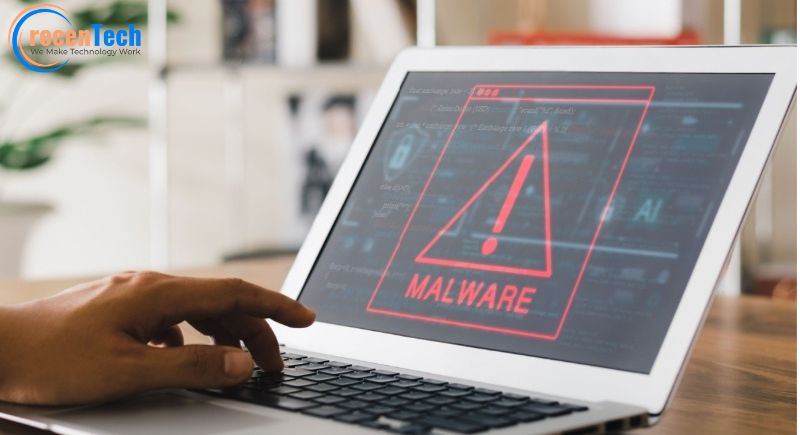
6. Malware That Hides in the Shadows (Fileless and Cryptojacking)
Forget the noisy virus that screams “I’m here!” Modern malware is like a ghost—it leaves barely a footprint. Fileless malware runs entirely in your system’s memory; nowhere to find it on your hard drive. Cryptojacking, meanwhile, is that annoying neighbor stealing your Wi-Fi you might not notice at first, but your machines slow down while hackers mine crypto on your dime.
7. DDoS Attacks
Picture this: thousands of “visitors” hammer your site at once, your servers choke, and boom—your customers get a big fat “server error.” That’s a Distributed Denial of Service (DDoS) attack, and it’s only getting bigger thanks to millions of hacked IoT devices (hello, smart fridges, and cameras).
Even giant cloud companies can struggle against waves this big, so smaller fish need all the help they can get.
8. Quantum Computing
Quantum computers aren’t mainstream, yet. But hackers are already stealing encrypted data and tucking it away, waiting for quantum power to crack the locks years from now. It’s like stealing a diary and waiting decades until you know how to read it.
If you’re handling super-sensitive data that needs to stay secret long-term, starting to prepare with quantum-resistant encryption isn’t just smart, it’s necessary.
9. IoT Devices
Smart locks, networked printers, and even IoT coffee makers all have one thing in common: weak security. And with hybrid work, your employees’ home setups expand your attack surface without you even noticing.
One compromised smart device can be a hacker’s golden ticket to your core systems. Not cool.
10. Cyber-Enabled Fraud
Business Email Compromise (BEC) scams are the sneaky bad boys of cybercrime. They mix fake emails with fake phone calls (vishing) and stolen identities, creating an illusion so convincing that employees hand over access or cash without a second thought.
Funny thing? BEC scams rake in more losses globally than ransomware but rarely hit the headlines. Imagine that.
11. Insider Threats
Threat actors aren’t always behind some dark screen in a hoodie. Sometimes they’re in your office, just careless employees sharing sensitive info by mistake. The insider threat spectrum runs wide: from the disgruntled saboteur to the well-meaning but clueless worker.
Zero-trust isn’t just tech jargon anymore; it’s about assuming nobody’s off-bounds, not even your closest teammate.
12. Configuration Oopsies
You wouldn’t leave the front door wide open overnight, right? Well, companies do that all the time digitally. A misconfigured cloud database or a forgotten permission can spill millions of records to the public, no hacking required.
It’s embarrassing and painfully common.
13. Cloud Vulnerabilities
Cloud services are powerful but easy to misunderstand. Providers secure the infrastructure, but you must lock down your applications and user access. Neglect this “shared responsibility” and you’ll have holes big enough for cyber attackers to stroll through.
14. Mobile Device Vulnerabilities
Work isn’t tied to desks anymore, and neither are risks. Smartphones and tablets are fertile ground for attackers:
- Malware-infected apps from unofficial stores.
- SIM-swapping to hijack phone numbers and intercept MFA codes.
- Employees connecting to unsecured Wi-Fi in airports or cafés.
A single lost phone with weak security can become the master key to a company’s network.
15. Poor Cyber Hygiene and Data Management
Most breaches don’t come from genius hackers. They come from everyday neglect. A weak password here. An ignored update there. A forgotten file with sensitive data. Little gaps that open big doors.
Cyber hygiene is the digital version of washing your hands. Easy to skip. Easy to dismiss. But it stops disasters.
Strong passwords, two-factor login, regular updates, and basic staff training may sound dull. Yet these plain steps block most attacks before they close.
How Businesses Can Fight Back Against Cybersecurity Threats in 2025
Cybersecurity in 2025 doesn’t come with a single fix. It’s messy, it changes fast, and no one solution will keep you safe forever.

Experts often compare it to an onion. You peel one layer away, and there’s another underneath. That’s how defenses should work, too. If one wall breaks, the next one is still there. Alone, each layer has limits. But together, they make it harder for attackers to reach the heart of your business.
Threat intelligence
Most people don’t bother watching the warning signs. And that’s usually where things go wrong.
You don’t need fancy tools to see trouble coming; just paying attention helps.
Threat feeds, industry alerts, even a quick scan of what’s hitting other companies in your field… It’s all out there.
But here’s the catch: too much info, too fast. Feeds pile up, alerts never stop, and soon your inbox looks like a firehose. A big team can filter it, fine. A small team? They drown.
Employee training
Research consistently suggests that people, not machines, remain the softest entry point. Phishing simulations, internal awareness campaigns, and even casual “security nudges” over Slack may sound mundane, yet they often stop attacks that expensive firewalls miss.
Of course, training fatigue is a real problem; employees can become desensitized if every email looks like a test. The trick lies in balanced education without alienating.
Layered defenses
Multi-factor authentication, intrusion detection systems, and endpoint security tools still matter. A layered approach does not mean endlessly stacking products; rather, it is about thoughtful redundancy. If one fails, another compensates.
There is always the critique that too many layers create friction for users, and that friction, ironically, leads to insecure workarounds. So, layers must be tuned rather than blindly piled on.
AI and automation
Tools like Darktrace and CrowdStrike give businesses a significant edge. They can spot strange behavior that humans would miss in real time. Think of them as digital guard dogs that never get tired.
But here’s the catch: attackers are using AI too. That means your defense system is fighting an enemy that learns just as fast. It’s less of a shield and more of a race; one side makes a move; the other side adapts. No one stays ahead for long.
Specific threat responses
- For ransomware, the consensus is clear: maintain offline, regularly tested backups. Yet even backups are not invulnerable, as attackers increasingly target them first.
- With insider threats, rotating access credentials and enforcing least-privilege policies provide partial control. Still, insiders often know the system’s blind spots, making them harder to neutralize than external actors.
- In the cloud, zero-trust frameworks are widely recommended. But critics argue that zero trust can be aspirational more than operational; its complexity sometimes deters smaller organizations from full adoption.
- Regarding IoT, isolating devices on segmented networks prevents a compromised thermostat from becoming a gateway to sensitive financial systems. Yet segmentation itself requires foresight and discipline, qualities many fast-scaling startups struggle to prioritize.
Final Thoughts
The cybersecurity threats of 2025 make one thing clear: buying more software isn’t the answer. What really matters is strategy. Hackers now run their groups like real companies, with budgets, teams, and tools, while most businesses are still patching together solutions with limited staff.
The only way forward is to stop reacting and start planning. That means running audits before problems explode, pulling in real threat intel instead of guessing, and using automation where humans can’t keep up.
This fight won’t slow down. Security in 2025 is a moving target, and the businesses that treat it like daily discipline, not a side project, will be the ones that last.