Just as mobile-first design once separated modern products from outdated ones, AI-first design is becoming a new baseline. It’s not about chasing trends or adding buzzwords; it’s about responding to how people actually want technology to behave.
For more than a decade, mobile-first guided how digital products were built. Screens became smaller, interfaces simpler, and experiences faster. That shift made sense at the time smartphones had changed how people interacted with technology, and design had to follow.
Today, we’re seeing another shift just as significant, but far more complex. Devices are no longer the main challenge. Intelligence is.
Artificial intelligence is quietly changing what users expect from software. Products are no longer judged solely by how clean the interface looks or how quickly a page loads. They’re judged by how well they understand users, how accurately they adapt to behavior, and how much effort they remove from everyday tasks. This is where AI-first design enters the picture.
AI-first design is not about adding a chatbot to an existing product or sprinkling machine learning into a roadmap. It’s about designing products around intelligence from the start and rethinking what “good user experience” really means in that context.
From Screen Size to Smart Systems
Mobile-first design was largely a response to technical limitations: smaller screens and slower connections. Designers had to prioritize content, reduce clutter, and make interactions efficient. It was about constraints.
AI-first design, on the other hand, is about capability.
Instead of asking, “How does this look on a phone?” teams now need to ask, “How does this product think?”
Instead of static flows, we’re dealing with systems that learn, adapt, and change over time.
This shift fundamentally alters the design process. You’re no longer designing a fixed experience. You’re designing a relationship between the user and an evolving system.
What AI-First Design Actually Means?
AI-first design means intelligence is not an enhancement; it’s the foundation.
In traditional product design, logic is usually deterministic. If a user clicks a button, the system responds in a predictable way. AI-driven systems work differently. They analyze patterns, infer intent, and generate outcomes that may vary from user to user.

An AI-first product is designed with these assumptions:
- The system will learn from user behavior over time
- The experience may look different for different users
- Decisions may be probabilistic rather than fixed
- The product should improve the more it’s used
This requires designers, product managers, and engineers to collaborate earlier and more deeply than before. Design is no longer just about screens; it’s about behavior, feedback loops, and trust.
Why Is AI-First Design Becoming Necessary?
User expectations have quietly shifted.
People are used to platforms that recommend what they want before they search, filter information automatically, and reduce decision fatigue. When a product fails to do this, it feels outdated even if it’s visually polished.
At the same time, users are dealing with more information than ever. AI-first design helps manage that overload by prioritizing relevance over volume.
The value of AI-first products lies in their ability to:
- Reduce manual effort
- Surface insights instead of raw data
- Adapt to individual workflows
- Make complex tasks feel simpler
When done right, intelligence fades into the background. The product feels less like a tool and more like a capable assistant.
Designing for Learning, Not Perfection
One of the biggest mindset changes in AI-first design is accepting that the product won’t be perfect on day one.
Traditional design aims for polished, finalized experiences. AI-driven systems are improving gradually. Early versions might make mistakes, misunderstand context, or offer imperfect suggestions.
Good AI-first design plans for this.
Instead of hiding uncertainty, it acknowledges it. Users should understand when the system is confident and when it’s learning. Clear feedback, explainable behavior, and graceful error handling become critical design elements.
Trust doesn’t come from perfection; it comes from transparency.
Human and Machine, Working Together
A common misconception is that the AI-first design aims to replace users. In reality, the most successful AI products focus on augmentation, not automation.
AI handles repetitive tasks, pattern recognition, and data processing. Humans provide judgment, creativity, and context.
Designing for this collaboration means:
- Giving users control over important decisions
- Allowing them to correct or guide the system
- Making AI suggestions easy to accept or ignore
- Avoiding black-box behavior
When users feel they’re working with the system instead of being managed by it, adoption increases and resistance drops.
Rethinking User Experience in an AI-Driven World
AI-first UX doesn’t follow traditional linear flows. Instead, it’s shaped by context, prediction, and adaptability.
Some noticeable shifts include:
From menus to suggestions
Instead of forcing users to search through options, the system surfaces what’s most relevant at the moment.
Instructions to conversations
Natural language interactions allow users to express intent without learning rigid interfaces.
From static screens to evolving interfaces
The product changes as the system learns more about the user.
This doesn’t mean visual design becomes less important. It means visual design must support intelligence rather than compete with it. Clarity, restraint, and hierarchy matter more than decoration.
Designing for Responsibility and Trust
AI-first design carries ethical weight.
When systems influence decisions… what users see, choose, or prioritize then designers have a responsibility to ensure fairness, privacy, and clarity. Poorly designed AI can confuse users, reinforce bias, or erode trust.
Responsible AI-first design includes:
- Clear consent around data usage
- Thoughtful defaults that avoid manipulation
- Visibility into how recommendations are generated
- Options to opt out or customize behavior
Trust is fragile. Once lost, it’s difficult to regain no matter how advanced technology is.
Organizational Impact of AI-First Thinking
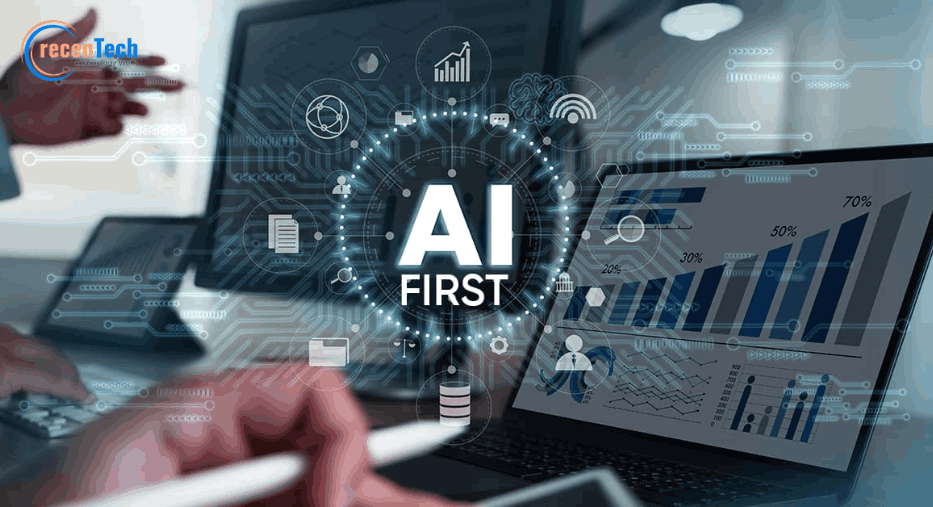
AI-first design doesn’t only affect products; it affects teams.
Designers need a basic understanding of data and machine learning concepts. Engineers need to consider user experience earlier in development. Product teams must plan for iteration rather than one-time launches.
This often leads to:
- Tighter collaboration across disciplines
- Faster experimentation cycles
- Continuous measurement and refinement
- Long-term thinking over short-term features
Companies that treat AI as a side project often struggle. Those that integrate it into their design culture move faster and build more resilient products.
Crecentech Systems & Services helps organizations design AI-first digital products that learn, adapt, and scale with real user needs.
The Long-Term Advantage of AI-First Products
AI-first products get better over time.
Every interaction feeds the system. Every correction improves accuracy. Over months and years, these products have developed an advantage that’s difficult for competitors to replicate.
This creates a powerful feedback loop:
More users → better data → smarter experiences → more users
Design plays a crucial role in making this loop work. Without thoughtful design, intelligence feels intrusive. With a good design, it feels indispensable.
Looking Ahead
Just as mobile-first design once separated modern products from outdated ones, AI-first design is becoming a new baseline. It’s not about chasing trends or adding buzzwords; it’s about responding to how people actually want technology to behave.
Users want products that understand them, adapt to them, and respect their time. AI makes that possible. Design makes it usable.
The next generation of successful digital products won’t just look good. They’ll think well and feel natural doing it.