To succeed, you must embrace a mindset of continuous adaptation. Focus on creating value that AI cannot replicate unique insights, community trust, and authentic human experiences. By combining these human elements with the efficiency of modern technology, you will not only survive the coming changes but thrive in the new digital economy. The future is coming fast: make sure your brand is ready to meet it.
Marketing online isn't just changing. It’s moving at a breakneck pace. To be honest, strategies from even two years ago already feel like ancient history. 2024 and 2025 were the trial years for AI. But 2026 is different.
This is when real work starts.
We are at a point where software can handle most of the boring, repetitive tasks on its own. It sounds great, right? But there is a twist. As everything becomes more automated, people are actually craving the real human connection more than ever before.
We are moving into a time where technology handles repetitive tasks on its own, but ironically, people are craving real, personal human connections more than ever before.
For business owners and marketing teams, the old playbook is mostly useless. The standard SEO tricks, generic social posts, and basic email blasts just don't work like they used to. To stay ahead, you have to understand how search engines, social media, and customer expectations have been completely rebuilt.
This guide explores the definitive trends and predictions for digital marketing in 2026, offering actionable strategies to help your brand lead rather than follow.
1. From SEO to AIO: Optimizing for the Answer Engine Era
For twenty years, SEO was about one thing: getting your website onto the first page of Google. In 2026, the "first page" looks like it used to be. Most users don't even see a list of links anymore. Instead, they get a single, clear answer generated by an AI agent.
Platforms like Perplexity, OpenAI’s SearchGPT, and Google’s evolved Gemini-powered search are changing how users find information. Instead of browsing a list of websites, users receive a synthesized, direct answer. This shift represents the most significant change in information retrieval since the invention of the web browser.
The Citation Game: Why Quality Beats Quantity
To survive this, you have to stop writing for keywords and start writing for authority. AI models like SearchGPT or Google Gemini look for the most reliable source of truth. If you are just repeating what everyone else is saying, you won't get cited.
You should focus on the original data. For example, if you run a real estate company, don't just write a blog about how to buy a house. Instead, publish a report on the specific buying habits in your local city based on your own sales data. That unique info is what AI engines actually want.
Making Your Content "AI-Friendly"
AI Optimization (AIO) is the new standard. It means making your site easy for machines to read and summarize.
- Direct Headings: Use headings that ask a specific question. Follow them immediately with a clear, one-sentence answer.
- Schema Markup: This is a code that tells search engines exactly what your data means. In 2026, this is a requirement, not a suggestion.
- High Fact Density: AI models like content that has a lot of facts and very little fluff. Cut out the long introductions that don't add value.
2. The Rise of Agentic AI and Autonomous Marketing Departments
In 2026, we are moving beyond simple chatbots. The new frontier is an Agentic AI. These are autonomous agents capable of performing complex multi-step tasks with minimal human oversight. They don't just follow a script; they reason through a goal.
The Shift from Tools to Teammates
A marketing manager in 2026 does not spend their day writing emails or setting up ad groups. Instead, they oversee a small team of AI agents. One to do market research, sifting through thousands of social conversations to surface emerging pain points. Another takes over content creation, turning those insights into a blog post, social updates, and an email newsletter in one coordinated workflow.
A third agent handles "Distribution," identifying the best time to post and managing the budget for paid amplification.
The "Marketing Department of One"
This technology allows small businesses to compete with giants. A single founder can now run a sophisticated, multi-channel marketing operation that previously required a team of ten. The competitive advantage is no longer the size of your staff, but the quality of your strategy and the prompts you provide to your autonomous systems.
3. Hyper-Personalization via First Party and Zero-Party Data
The "death of the cookie" is an old headline, but by 2026, the industry will have fully stabilized in a cookie-less world. Privacy regulations have matured, and consumers are more protective of their data than ever. The response from successful brands is a move toward radical transparency and value exchange.
The Value Exchange Model
To get data, you must provide immediate value. In 2026, this looks like:
- Interactive Decision Tools: "Build your custom wardrobe" quizzes that gather style preferences while providing a tailored shopping list.
- Zero-Party Data Collection: This is data the customer intentionally shares with you. By asking directly about their preferences, you avoid the "creepy" factor of tracking them across the web.
- Privacy-Enhancing Technologies (PETs): Brands use decentralized data storage and "clean rooms" to analyze customer behavior without ever seeing personally identifiable information.
Predicting Customer Needs
With high-quality first-party data, predictive analytics becomes the standard. By 2026, your CRM should be able to predict when a customer is about to churn or when they are likely to need a refill, triggering an automated, personalized outreach before the customer even realizes they need the product.
| Data Type | Definition | 2026 Application |
|---|---|---|
| Zero-Party | Data given proactively by the user. | Used for hyper-personalized product recommendations. |
| First-Party | Data collected from your own platforms. | Used to build lookalike audiences and trigger-based marketing. |
| Second-Party | Data shared between strategic partners. | Used for co-marketing campaigns in niche industries. |
4. Video Marketing: The Dominance of Raw, Short-Form, and Live Content
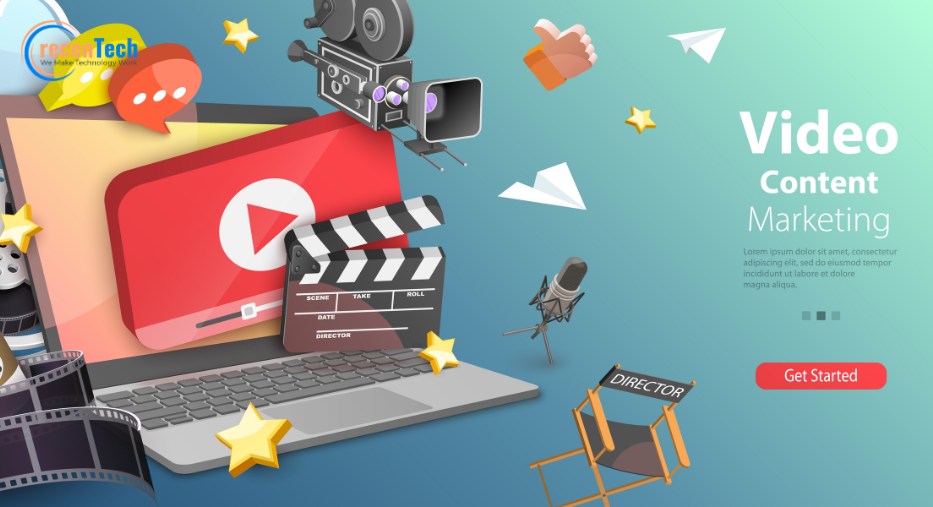
Video is no longer a "part" of digital marketing; it is the core. By 2026, short-form video content on TikTok, YouTube Shorts, and Instagram Reels accounts for the vast majority of mobile data traffic. However, the style of this video has shifted.
The End of High-Production Gloss
Consumers in 2026 are increasingly skeptical of "over-produced" content. They associate high production with "corporate spin." The brands winning the attention war are those producing "Lo-Fi" content that feels authentic, unscripted, and human. This includes "behind-the-scenes" footage, raw employee interviews, and user-generated content (UGC).
Serialized Storytelling
Instead of one-off viral videos, brands are moving toward "Serialized Content." Think of this as mini-documentaries or recurring weekly shows on social media. This builds a habitual relationship with the audience, turning viewers into subscribers and subscribers into brand advocates.
Interactive and Shoppable Video
Social commerce is fully integrated into the viewing experience. When a user watches a makeup tutorial, they can click on the lipstick in the video and purchase it without leaving the app. This frictionless commerce is the benchmark for success. Live-stream shopping, once popular only in specific markets, is now a global multi-billion-dollar industry.
5. Visual and Voice Search as Primary Discovery Tools
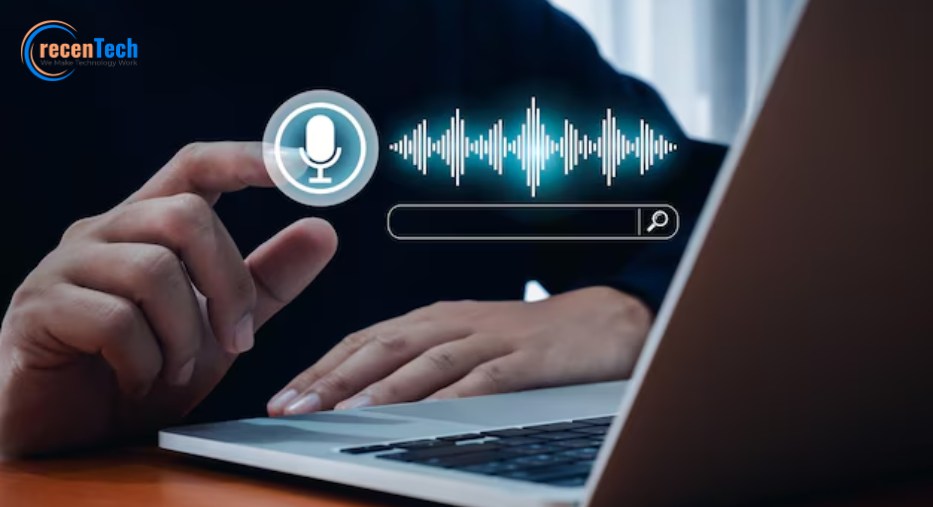
The way we "ask" the internet for things has moved beyond the keyboard. With improvements in wearable tech like AR glasses and advanced smartphone cameras, visual search is a primary discovery method.
Visual Search (The "Point and Buy" Economy)
A consumer sees a unique piece of furniture in a cafe, points their phone at it, and instantly receives a link to buy it or a similar alternative. If your product photos aren’t dialed in for visual search, with sharp, multi-angle shots and the right metadata, you’re leaving the most direct sales channel in history on the table.
Voice Search and Natural Language
Voice search is moving away from simple commands toward complex, multi-turn conversations. A user might say, "Find me a sustainable clothing brand that delivers to my city, has a recycling program, and has items in my size for under $100." Marketing content must be written in a conversational tone to match these natural language queries. Long-tail keywords have been replaced by "conversational clusters."
6. The "Phygital" Experience: Merging Physical and Digital Realities
In 2026, the line between online and offline shopping is almost invisible. This is the "Phygital" trend, where digital convenience meets physical experience.
Augmented Reality (AR) as a Standard
AR is no longer a gimmick. Whether it is "trying on" a watch virtually, seeing how a new rug fits in a living room, or using an AR overlay in a grocery store to see nutritional information, AR has become a standard expectation. It reduces the "mental friction" of online shopping, lowering return rates, and increasing customer confidence.
The Modern Showroom
An alternative to traditional retail is "Experience Centers." A clothing retailer might have a small physical footprint with no inventory for sale on-site. Consumers utilize an augmented reality mirror to view several colors, try samples, and tap their phone to have the item delivered to their house in two hours. This hybrid concept offers a high-end, technologically advanced experience while optimizing real estate expenses.
7. Neuromarketing and the Science of Consumer Emotion
By 2026, marketing will become more of a hard science. Neuromarketing, the study of how the brain responds to marketing stimuli, is moving from the lab to the mainstream.
Emotional Analytics
Brands are using AI to analyze customer sentiment not just through words, but through facial expressions and voice tonality during video calls or interactions with AI avatars. This allows brands to adjust their messaging in real-time based on the user’s emotional state.
Biometric Feedback in UX
Website design is now informed by eye-tracking and biometric feedback. Brands are building "Adaptive Interfaces" that change their layout based on where a user is looking or how quickly they are scrolling. This kind of fine-tuning keeps the key info right in front of users, driving conversion rates higher than ever.
8. Social Media as the New Homepage and Search Engine
The typical website is a secondary destination for younger people. These days, the main search engines, retail locations, and customer support centers are social media sites.
The In-Platform Ecosystem
In 2026, a brand's Instagram store or TikTok profile is more significant than its website. The complete client journey takes place on the social app:
- Discovery: Users search for "best eco-friendly sneakers" on a social platform.
- Evaluation: They check comments, "saved" posts, and UGC videos.
- Purchase: They buy via the integrated shop.
- Support: They message the brand directly for updates.
The Decline of the "Open Web"
As platforms become "walled gardens" that keep users inside, marketers must focus on "platform-native" content. This means creating content that is specifically designed for the quirks and features of each platform, rather than cross posting the same link everywhere.
9. Performance-Based Influencer Marketing and "Internal Influencers."
The era of paying an influencer for a flat fee for a single post is over. In 2026, influencer marketing is strictly performance-based, driven by data and long-term partnerships.
The Micro-Influencer Pivot
Brands are moving away from celebrities with millions of followers toward "Nano" and "Micro" influencers who have small, highly engaged, and niche audiences. These influencers are treated as affiliate partners, earning commissions based on tracked sales. This ensures that the influencer's interests are perfectly aligned with the brand's goals.
Employee Advocacy (The Internal Influencer)
One of the biggest trends in 2026 is "Employee Advocacy." Consumers trust employees more than they trust official brand accounts. Companies are now training their staff to be "internal influencers," encouraging them to share their professional expertise and "day in the life" content on platforms like LinkedIn and TikTok. This humanizes the brand and builds trust in a way that traditional advertising cannot be used.
10. Community-Led Growth and the Return to Niche Platforms
As the "big" social networks become crowded, noisy, and filled with AI-generated content, consumers are retreating into smaller, gated communities.
The Rise of "Small-Circle" Marketing
Successful brands are building their own ecosystems on platforms like Discord, Slack, or proprietary community apps. This is "Community-Led Growth." Instead of broadcasting a million strangers, brands are focusing on nurturing a community of 1,000 "true fans."
Token-Gated Experiences
Learning from Web3’s rocky start, brands in 2026 are handing out “digital tokens” through everyday loyalty apps to unlock exclusive content, early releases, or invite-only events. It builds that insider feeling that keeps customers sticking around, even when the market is crowded.
11. Sustainability and Ethical AI as Brand Pillars
In 2026, sustainability is not just a marketing slogan; it is a measurable metric that consumers demand.
Radical Transparency in the Supply Chain
Consumers expect to see the "digital twin" of a product. By scanning a QR code, they want to see exactly where the materials came from, the carbon footprint of the shipping, and the labor conditions of the factory. Brands that cannot provide this level of transparency will be "canceled" by a more conscious consumer base.
The "Human-Made" Premium
As AI-generated content floods the internet, a "Human-Made" or "Human-Verified" label will become a premium branding tool. There is a growing segment of consumers who are willing to pay more for content, art, and products that are explicitly created by humans. Authenticity marketing is the ultimate defense against digital content commoditization.
12. The Death ofA12. The Death of Traditional Lead GenerationTraditional Lead Generation
The old model of "give us your email to download this PDF" is dead. In 2026, consumers are too savvy for this trade. They know that "gated content" usually leads to an endless sequence of sales emails.
Value-First Lead Gen
Instead of gating content, brands are moving to "Value-First" models. This means providing the full value upfront, the complete guide, the full video, the entire tool, and only asking for a connection once trust has been established. The focus has shifted from "collecting leads" to "building relationships."
Conversation as the Funnel
The marketing funnel is no longer a linear path. It is a conversation. Using AI-driven messaging, brands are engaging in real-time dialogue with prospects. A lead isn't someone who filled out a form; a lead is someone who had a meaningful five-minute conversation with your brand's AI agent.
13. Hyper-Local Marketing and the Return of the "Local Hero."
Despite the global reach of the internet, there is a strong trend toward "Hyper-Localization" in 2026.
Geo-Fencing 2.0
Advanced geo-fencing allows brands to send highly relevant, real-time offers to consumers based on their exact physical location and their current intent. If a consumer is walking past a competitor's store and their search history suggests they are looking for a specific item, a brand can send a "Better Deal" notification to their phone or AR glasses.
Localized Content at Scale
AI allows global brands to create thousands of versions of the same ad, each localized with local landmarks, local slang, and local influencers. This makes a global giant feel like a "local hero" in every city it operates in.
Summary Table: The Marketing Shift (2024 vs. 2026)
| Category | 2024 Strategy | 2026 Prediction |
|---|---|---|
| Search Engine Strategy | Keyword density and backlink volume. | Answer Engine Optimization and Information Gain. |
| Content Creation | Human-led, AI-assisted drafting. | Autonomous AI agents with human strategic oversight. |
| Social Media Goal | Driving traffic to a centralized website. | Full-funnel social commerce and community building. |
| Data Privacy | Transitioning away from third-party cookies. | Fully realized first-party and zero-party ecosystems. |
| Video Production | High production, "viral" focused clips. | Raw, authentic, serialized, and shoppable content. |
| Customer Interaction | Reactive support and scripted chatbots. | Proactive, agentic AI providing 24/7 personalized service. |
| Consumer Trust | Based on brand size and reviews. | Based on supply chain transparency and "Human-Made" labels. |
Strategic Reallocation: Where to Put Your Marketing Budget in 2026
Preparing these shifts requires a fundamental reallocation of resources. You cannot win tomorrow’s battles with yesterday’s budget.
- Invest in Data Architecture (20%): Prioritize a high-quality Customer Data Platform (CDP). Clean, organized, and accessible data is the fuel for every other trend on this list.
- Original Research and IP (25%): Stop paying for "content." Start paying for "intellectual property." Hire researchers, data scientists, and subject matter experts to create content that AI cannot replicate.
- Video and Interactive Media (30%): If video isn't the largest part of your creative budget, you are invisible to the next generation of consumers.
- AI Orchestration and Agents (15%): Invest in the tools and the training required to manage autonomous marketing agents.
- Community and Loyalty (10%): Dedicate funds to building and moderating your own "walled garden" communities.
The Human Element in a Digital World
Despite all technological advancements, the core of marketing remains the same: human psychology. People buy from brands they trust, brands they recognize, and brands that solve their problems.
As we move into 2026, the "digital" part of marketing will be handled more and more by machines. The "marketing" part, the strategy, empathy, storytelling, and the creative vision, will remain a unique human endeavor. The most successful brands will be those that use AI to handle the mundane tasks, freeing up their human talent to focus on building genuine, emotional connections with their audience.
Leading in 2026 takes more than knowing the trends; it takes a partner who can actually ship them. At Crecentech, we are about turning cutting-edge tech into actual growth, not just another PowerPoint deck.
Whether you are overhauling SEO for the AI world, building a bulletproof first-party data foundation, or cranking out video content that actually drives results, our team helps you claim your space instead of scrapping for scraps. Let’s make your brand’s next chapter something you can measure, not just daydream about.
Conclusion
The year 2026 won’t be gentle with businesses that stand still. The move toward answer engines, the spread of autonomous AI agents, and the push for first-party data aren’t just “trends”; they’re structurally shifting in how the digital world now works.
To succeed, you must embrace a mindset of continuous adaptation. Focus on creating value that AI cannot replicate unique insights, community trust, and authentic human experiences. By combining these human elements with the efficiency of modern technology, you will not only survive the coming changes but thrive in the new digital economy. The future is coming fast: make sure your brand is ready to meet it.