We are living through one of those rare moments when the rules of business are being rewritten as we watch. It feels messy and unpredictable, sure, but it is also packed with opportunity. The real promise of AI is not to push people out of the picture; it is to help them operate at a higher level. It challenges us to stop acting like robots, doing the same repetitive tasks over and over, and start acting like humans, using our creativity and insight to build something new.
The conversation around Artificial Intelligence has shifted. Two years ago, it was mostly sci-fi speculation and tech demos. Today, it is a silent engine running in the background of almost every industry. You do not need to be a futurist to see it; you just must look at how your daily workflow has changed.
We are moving past the "wow" phase and settling into the utility phase. The question is no longer "What can AI do?" The better question is "How are we actually using it to stop wasting time and start building better things?"
This is not just about faster computers. It is about a fundamental shift in how we approach employment, how we talk to customers, and how we bring new ideas to life.
The New Definition of "Work"
For a long time, we defined productivity by output. How many words did you write? How many lines of code? How many emails did you answer? AI is forcing us to rethink that metric.

From Creator to Editor
In the past, the "blank page" was the biggest bottleneck. Whether you were writing a brief, designing a logo, or drafting a contract, starting from zero was the hard part.
AI has effectively killed the blank page. Now, knowledge workers are shifting from being raw creators to being astute editors. The software generates the first draft, the structure, or the basic code block. The human’s job is to refine, verify, and inject strategy. This shifts the value of an employee from "who can type the fastest" to "who has the best taste and judgment."
The End of Monotony
Every job has those tasks that everyone hates. Data entry, scheduling, summarizing three-hour meetings, or sorting through thousands of resumes. AI is quietly automating these boredom centers.
This scares some people because it looks like a job replacement. And in some cases, it is. But mostly, it is job refinement. When you strip away from the repetitive administrative work, you are left with the tasks that actually require a human brain: negotiation, empathy, creative strategy, and complex problem-solving.
Marketing: The End of the Guessing Game
If you work in marketing, you know the old saying: "Half the money I spend on advertising is wasted; the trouble is I don't know which half."
AI is finally solving that problem.

Hyper-Personalization at Scale
We used to rely on demographics. We targeted "Males, 25-40, living in Chicago." That is a broad brush. AI looks at behavior, not just identity. It knows that a specific user is looking for camping gear at 2:00 AM on a Tuesday and prefers video content over text.
This allows brands to create marketing that feels less like a broadcast and more like a conversation. We are seeing tools that can generate thousands of unique ad variations, matching the copy and imagery to the specific psychological profile of the viewer. It is efficient, but it also raises the bar. Generic, "spray and pray" marketing campaigns are becoming obsolete because they simply cannot compete with an algorithm that knows exactly what the customer wants before they do.
Predictive Analytics
Marketing used to be reactive. You ran a campaign, checked the numbers, and adjusted. Now, it is predictive.
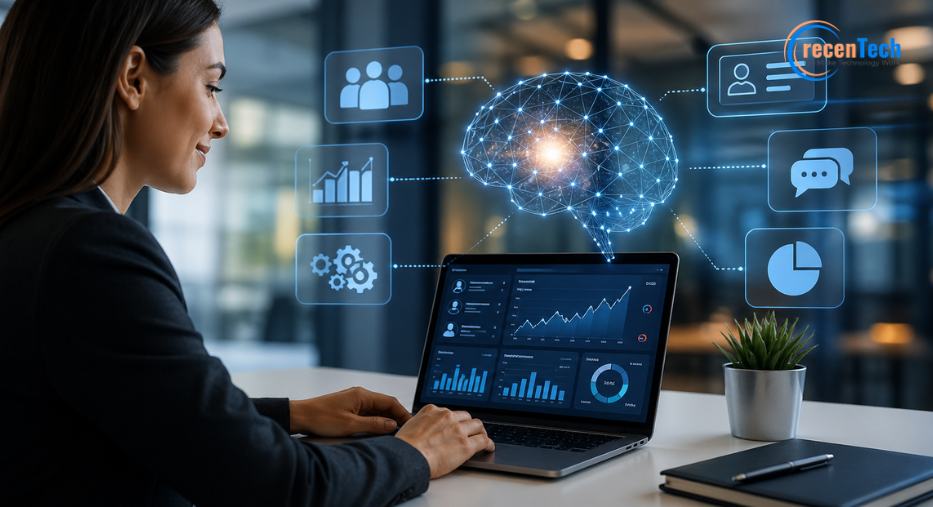
AI models analyze historical sales data, social media sentiment, and economic trends to forecast what will sell next quarter. Companies are not just reacting to trends; they are stocking inventory and prepping campaigns for trends that have not fully formed yet.
Innovation: The Speed of Thought
Perhaps the most exciting shift is how we build things. The barrier to entry for innovation has never been lower.
Coding is for Everyone
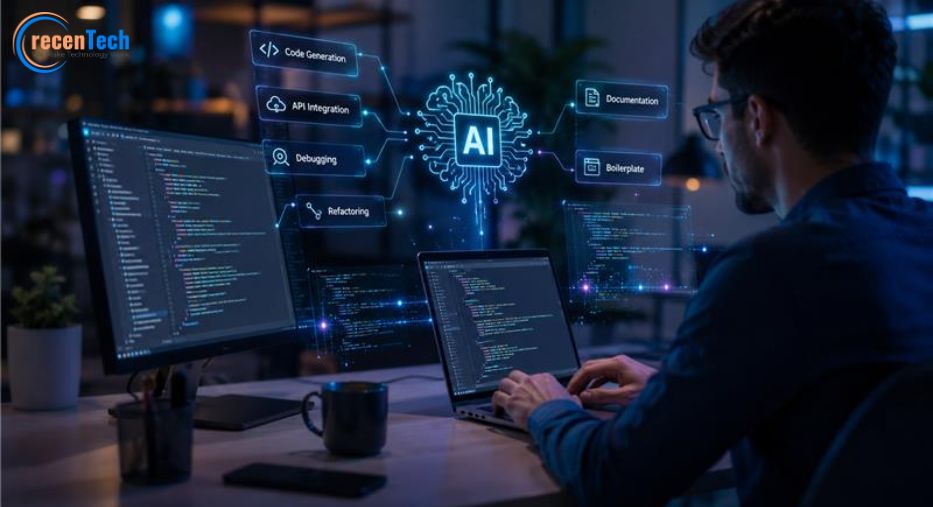
You used to need a four-year degree and years of practice to build a functional software application. Now, natural language processing allows non-technical founders to write code using plain English. You can describe a function, and the AI writes the script.
It will not boot out senior engineers, but it hands up power to everyone else. A marketing manager can whip up a script to automate reports. A small business owner can throw together a basic inventory tracker. The gap between "I've got this idea" and "Here's a working prototype" has shrunk to nothing.
R&D Acceleration
In fields like pharmaceuticals and material science, AI is running simulations that would take human lifetimes to complete. It is identifying potential drug candidates and testing material durability in virtual environments. This means we will see rapid acceleration in physical products, not just digital ones.
The Human Element: What Machines Can't Do
With all this automation, a countertrend is emerging. As content becomes cheap and abundant, human connection becomes premium and scarce.
An AI can write a polite customer service email, but it cannot de-escalate a situation with a furious client who feels unheard. It can design a beautiful house, but it cannot understand why a family needs a specific flow to their living room.
The future belongs to those who can use tools without losing their humanity. The most successful professionals will not be the ones who fight the tech; they will be the ones who use the tech to clear their plate so they can focus on relationships, strategy, and high-level creative thinking.

Staying Ahead of the Curve
The danger right now is not that AI will take over the world in a dramatic, Hollywood-style. The danger is falling behind because you ignored the shift. The companies that are winning are the ones integrating these tools into their boring, everyday processes to save time and money.
You do not need to rebuild your entire business overnight. You just need to start finding the friction points; the slow, expensive, repetitive parts of your operation, and applying the right intelligence to smooth them out.
Ready to modernize your business operations?
Tech can feel like a maze sometimes, but you do not need to tackle it alone. Whether you are sorting out your digital tools, grabbing smarter data options, or overhauling back-office stuff, CrecenTech's got you covered. We slice through the mess and launch strategies that deliver actual growth. Quit guessing what tech can do and start seeing the payoff.
Final Thoughts
We are living through one of those rare moments when the rules of business are being rewritten as we watch. It feels messy and unpredictable, sure, but it is also packed with opportunity. The real promise of AI is not to push people out of the picture; it is to help them operate at a higher level. It challenges us to stop acting like robots, doing the same repetitive tasks over and over, and start acting like humans, using our creativity and insight to build something new.