Businesses can achieve reliability, reduce expenses, and open the door to a smarter, more resilient future by implementing smart infrastructure strategies. Utility management now focuses on preventing issues before they arise rather than responding to them.
A new era of utility management is upon us. In which systems should we not wait for failure to act? Instead, they predict disruptions, adjust, and even correct them without human intervention. AI infrastructure is driving this change by redefining how grid operators, water utilities, and energy companies handle performance, cost, and reliability.
Traditional infrastructure has relied on planned maintenance and manual tasks for many years. However, this approach is no longer viable as energy demand increases, and grids get more complicated. Automation, analytics, and connected data are the foundation of modern utility operations, and the transition to intelligent systems represents a great change.
Transition from Reactive to Automation Tools
Conventional grids are made to react when issues arise. Teams work quickly to locate the problem and restore service when a transformer fails, or a power line goes down. This reactive approach frequently results in customer dissatisfaction, revenue loss, and delays.
However, a proactive approach is made possible by AI infrastructure. These systems can automatically take corrective action, such as rerouting power, balancing loads, or notifying maintenance teams before the problem worsens. They use continuous monitoring, pattern recognition, and predictive analytics to identify early warning signs of faults. Self-healing utilities ensure service continuity and minimize downtime. Networks that can identify and fix disruptions on their own are the result of this evolution.

Core Elements of Utility Management’s AI Infrastructure
Intelligent infrastructure requires the integration of several technological layers.
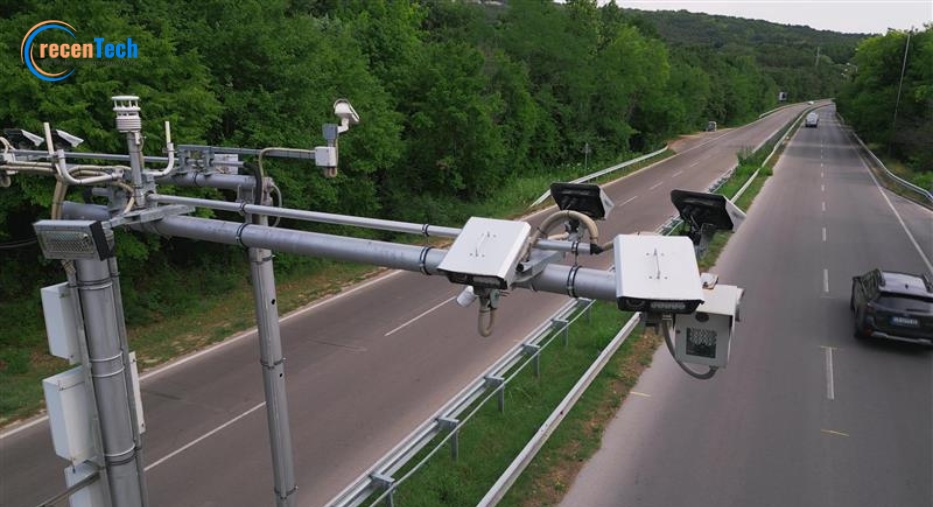
- IoT Sensors: IoT sensors and edge devices are among the crucial elements. They act as the grid sensory network, gathering data on load, voltage, and temperature across lines and equipment.
- Cloud Platforms and Data Pipelines: Data is gathered and sent to centralized systems for large-scale processing, storage, and analysis.
- Predictive Analytics Models: Use algorithms to predict equipment failure, spot anomalies, and suggest maintenance plans.
- Automation and Control Systems: Automated systems can isolate problems, reroute power, and preserve grid stability once we identify the fault.
- Integrated APIs: They enable real-time coordination with field maintenance tools, ERP software, and SCADA systems.
When combined, these technologies create an intelligent backbone that improves reliability over time by learning from grid behavior.

Decreased Downtime and Predictive Maintenance
One of the most effective applications of AI infrastructure is predictive maintenance. Conventional maintenance cycles frequently follow predetermined timetables. This could lead to unexpected problems.
For example, the system expects a possible failure and automatically schedules maintenance if a transformer starts to overheat or vibrate more than usual. This predictive approach increases the lifespan of assets and reduces unplanned outages and maintenance costs by up to 40%.
Integrating Renewable Energy Resources
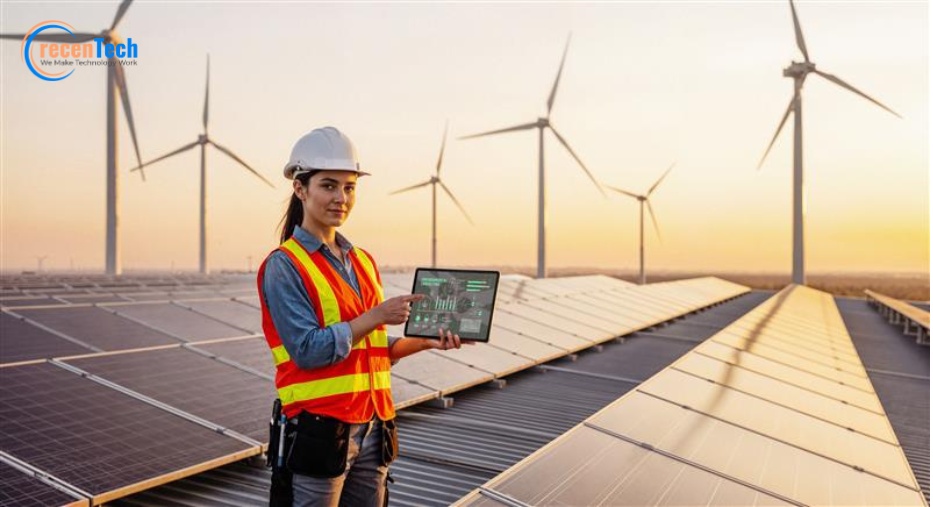
Utilities face new difficulties as the use of renewable energy increases, including variable generation levels, reliance on weather, and dispersed energy inputs. The intelligence required to effectively manage these variables is provided by AI infrastructure.
It balances energy from solar, wind, and conventional sources using real-time forecasting and optimization algorithms, ensuring a steady supply without the need for human intervention. This facilitates a more sustainable, low-carbon energy future and makes the integration of renewables easier.
Economic and Operational Benefits
AI infrastructure has an impact that goes beyond operational dependability. It provides utilities with economic value by:
- Decreased outage-related losses and downtime.
- Reduced labor and maintenance expenses.
- Optimal use of assets.
- Enhanced energy efficiency and adherence to regulations.
- Increased client satisfaction via reliable service availability.
These systems assist utilities in transitioning from cost centers to performance-driven organizations by changing the way data is used.
Challenges and Implementation Issues
Despite its potential, putting AI infrastructure into practice calls for careful planning. It is essential for businesses to deal with cybersecurity, data quality, and system integration.
Cross-functional cooperation between IT teams, data scientists, and operational engineers is essential to build an intelligent grid. Utilities can create scalable architectures, secure data pipelines, and models that are compatible with real-world operations by collaborating with AI development services.
Fully Autonomous Utilities are the Future
A completely autonomous grid that can monitor, predict, and resolve problems with minimal human interaction is the long-term goal for utility management. Higher reliability and operational resilience will be attained by utilities as infrastructure develops. The capacity to adjust to outside shocks like severe weather, cyberattacks, or abrupt changes in demand.
This change is being facilitated by AI infrastructure, transforming conventional utilities into intelligent networks.
Final Words
The future of self-healing utilities is not far from the future. It is already taking shape. AI infrastructure is changing the way energy and utility systems function by integrating sensors, automation, and modern analytics.
Businesses can achieve reliability, reduce expenses, and open the door to a smarter, more resilient future by implementing smart infrastructure strategies. Utility management now focuses on preventing issues before they arise rather than responding to them.